Why Meccano Sets Changed Engineering Play for Kids
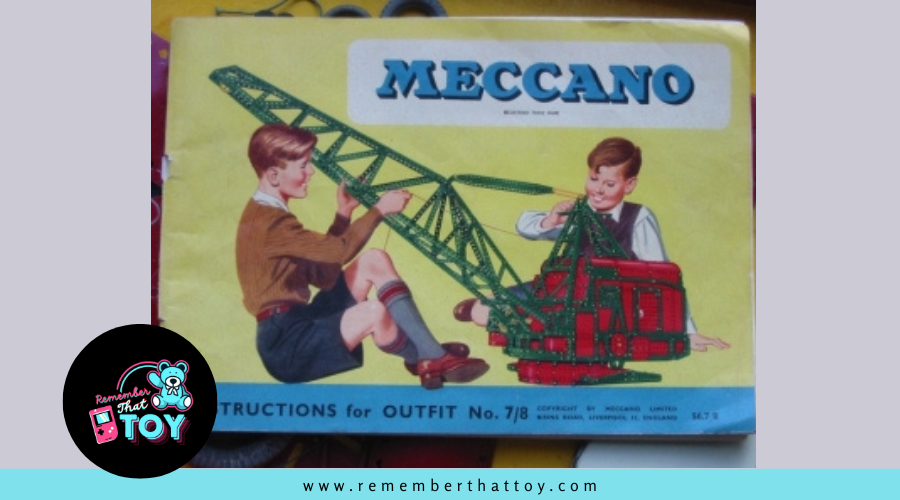
Meccano, a cherished construction toy, has an intriguing history that dates back to 1898, when Frank Hornby invented it in Liverpool, England. Initially named "Mechanics Made Easy," it aimed to simplify engineering concepts for children. In 1907, Hornby rebranded the toy and registered the Meccano trademark, paving the way for its future success. The establishment of Meccano Ltd in 1908 marked the beginning of a new age in the toy industry.
By 1914, the initial factory opened in Liverpool, which allowed for mass production. The early Meccano sets, numbered from 1 to 6, provided children with fundamental tools for creative engineering play. The introduction of the No. 7 Outfit in 1922 expanded the range of construction kits, making Meccano even more popular.
In 1926, to celebrate its 25th anniversary, Meccano introduced colored pieces, enhancing its visual appeal and further enchanting young builders. By the late 1920s and 1930s, Meccano had become the largest toy manufacturer in the UK, alongside iconic lines like Hornby Trains and Dinky Toys. This historical background showcases how Meccano transformed engineering play for kids, igniting their imaginations and creativity.
Evolution of Meccano Sets
From its humble beginnings as "Mechanics Made Easy," this iconic construction toy has undergone significant transformations over the years. When you look at the evolution of Meccano sets, you can see how they've changed to inspire engineering play in children. Originally introduced in 1901, these model construction kits allowed kids to build using metal strips, plates, gears, and wheels. The introduction of the No. 7 Outfit in 1922 marked a turning point, becoming the largest set available at the time, enabling more complex constructions.
Educational Impact on Children
Building with Meccano sets opens up a world of educational opportunities for children, blending fun with learning. These groundbreaking educational tools promote hands-on learning and critical thinking, allowing young builders to construct mechanical models while grasping fundamental engineering principles.
As you guide children through the assembly process, they develop problem-solving skills, figuring out how to navigate the rules and restrictions of building. Meccano sets encourage creativity, inspiring kids to experiment with different configurations and designs. By engaging with these sets, children gain a foundational understanding of mechanics and physics, which is crucial for fostering ingenuity.
Historical publications like *Meccano Magazine* have further supported this educational experience, providing assembly instructions and engineering knowledge that spark interest in STEM fields. STEM Education Growth highlights the increasing societal commitment to fostering scientific curiosity through hands-on exploration and interdisciplinary learning.
Many engineers credit their early experiences with Meccano sets as the catalyst for their careers, showcasing the lasting impact these toys have on inspiring future generations
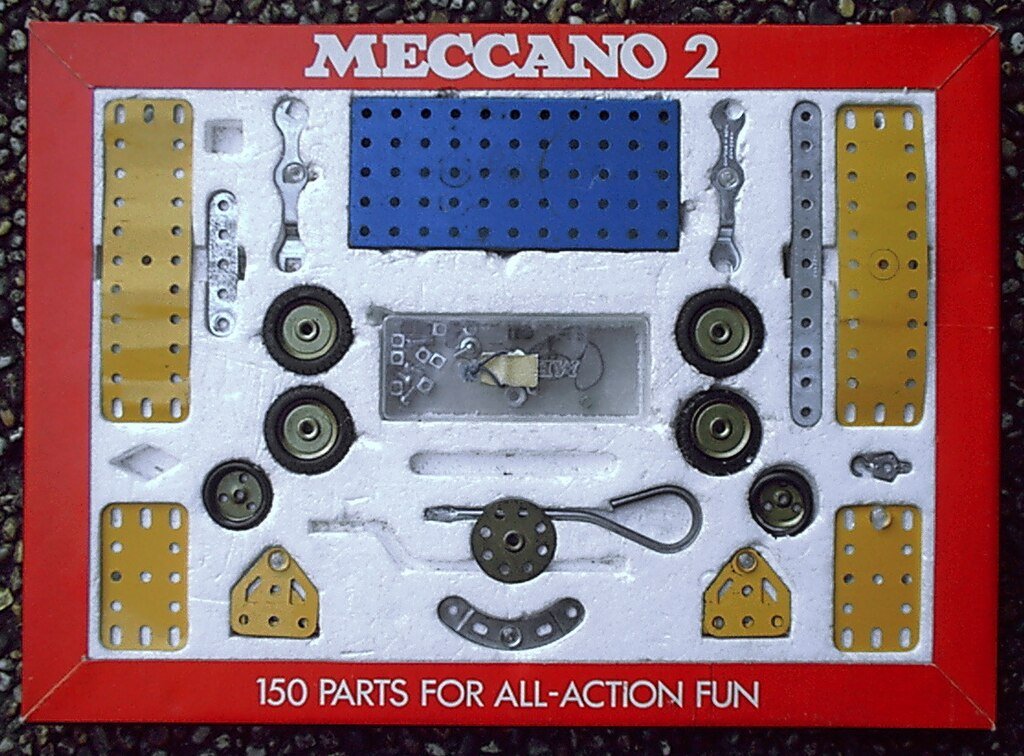
Image: Lady alys, 20030514 160101-Meccano set-rt1, CC BY-SA 3.0
Component Parts and Creativity
The versatility of Meccano's component parts sparks creativity in young builders, allowing them to explore their imaginations freely. With Meccano sets, you can immerse yourself in engineering play and create a world of possibilities. Here are four ways these parts inspire creativity:
- Reusable Components: The metal strips, plates, gears, and wheels can be used multiple times, letting you experiment without limits.
- Interchangeable Parts: Thanks to the standardized perforation of ½ inch, you can mix and match components, fostering unique designs and imaginative constructions.
- Diverse Models: From simple vehicles to intricate machinery, the range of construction options encourages original thinking and problem-solving.
- Integration of Technology: With the incorporation of electronic parts since 1970, you can build functional models that blend traditional engineering with modern technology.
Problem-Solving and Innovation
Often, kids face challenges that encourage them to think critically and come up with creative solutions, and Meccano sets are an excellent tool for this kind of hands-on problem-solving. By providing a diverse range of reusable metal strips, plates, and gears, these sets inspire children to engage in construction while exploring mechanical principles.
The introduction of electronic parts in the 1970s further fostered innovation, allowing young builders to create more complex designs. This iterative process of building and refining mirrors real-world engineering challenges, teaching kids resilience and adaptability in the face of obstacles. They learn that failure isn't the end but a stepping stone to success.
Moreover, programs like Mentoring Using Meccano highlight the toy's educational value, promoting collaborative engineering projects that improve communication and teamwork skills. Through these experiences, children not only develop critical thinking and technical abilities but also cultivate a mindset geared toward innovation, preparing them for future challenges in engineering and beyond.
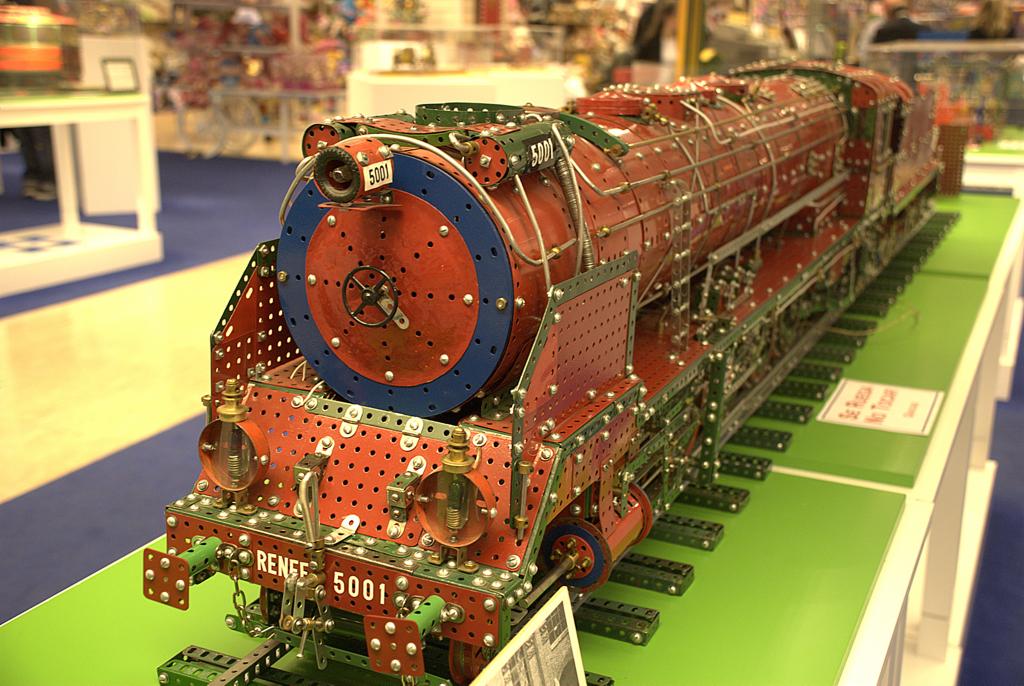
Image: José M Macías (lonoak), Meccano locomotive, CC BY 2.0
Wrapping Up
Meccano sets have left a lasting mark on the world of educational toys, blending creativity, problem-solving, and engineering principles into one hands-on experience. What started as a simple construction kit in the early 1900s grew into a tool that shaped generations of young inventors and engineers.
These sets didn’t just entertain—they taught valuable lessons about mechanics, physics, and perseverance. With reusable parts, endless design possibilities, and the addition of electronic components over time, Meccano encouraged kids to think critically, experiment freely, and learn through trial and error.