The History Behind Erector Sets as Creative Toys
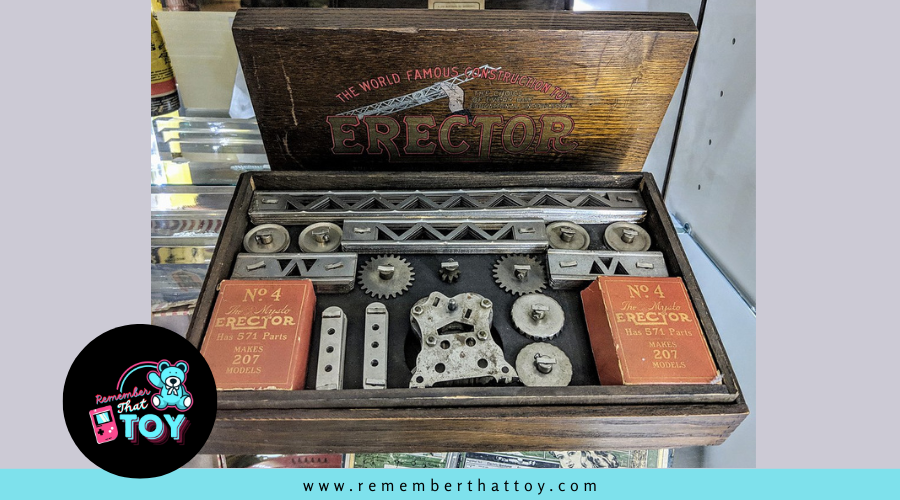
Erector Sets have an intriguing origin that dates back to 1911 when Alfred Carlton Gilbert was inspired by the sight of towering steel girders during a train trip from New Haven to New York City. This moment sparked Gilbert's vision for an educational toy that would engage children in the art of construction. By 1913, he launched the Mysto Erector, a set designed to encourage creativity and engineering skills among young builders.
The primary design featured sturdy one-inch square girders that connected with bolts, allowing kids to create both simple and complex structures. This groundbreaking approach to play captured the imagination of many, emphasizing hands-on learning. In 1914, the name evolved to The Mysto Erector, and by 1916, it became Gilbert Erector, reflecting the growing recognition of Gilbert's brand.
Some of the most iconic models included:
- The Giant Ferris Wheel: This impressive build showcased the Erector Set’s ability to replicate real-world structures with working parts. Builders could create a fully functional Ferris wheel powered by an electric motor.
- Bridges and Towers: Kits allowed children to construct large-scale bridges and skyscrapers, reflecting the architectural achievements of the time.
- Automobiles and Cranes: Moving vehicles and machines added dynamic elements to play, teaching kids the basics of mechanical engineering.
Image: Cullen328, Early Erector set, CC BY-SA 3.0
Marketing Strategies and Impact
The creative marketing strategies behind Erector Sets played a significant role in their success and enduring popularity. Launched in 1913, these sets were the initial toys to be prominently featured in major publications like The Saturday Evening Post and Popular Mechanics. Their groundbreaking advertisements targeted young boys, employing catchy slogans like "Hello, Boys! Make Lots of Toys!" to ignite interest in engineering and construction.
To stand out in a crowded marketplace filled with competitors like Lincoln Logs and Tinkertoys, Erector Sets highlighted their unique features, including electric motors, which set them apart. Their marketing strategies didn't stop at the initial launch; sustained efforts over the years adapted to shifting consumer interests, ensuring that Erector Sets remained relevant. This adaptability helped the brand maintain its status as a staple in American toy collections.
Design Innovations Over Time
Transforming playtime into an engineering adventure, Erector Sets has continuously evolved through cutting-edge designs that inspire creativity. The major redesign in 1924 introduced over 70 types of parts, allowing you to create more complex structures and broaden your imaginative construction projects. This versatility has always been a hallmark of the Erector Set.
Specialized kits further improved the experience, incorporating electric motors that let you build dynamic models like trains, steam shovels, and Ferris wheels. These innovations not only made the sets more engaging but also taught you about mechanics and engineering principles. A patented design feature allowed for lightweight hollow girders made from flat pieces, simplifying assembly and broadening your creative potential.
- Robotics and Coding: Modern Erector Sets feature programmable robotic components that allow children to build and control moving models using coding languages like Python or block-based programming. These sets align with STEM (Science, Technology, Engineering, and Mathematics) education initiatives, preparing kids for future careers in technology and engineering.
- Motorized Models: Electric motors and remote-control features enable children to create vehicles, robots, and machines that move and respond to commands.
- Smart Technology Integration: Some sets include Bluetooth and app compatibility, allowing builders to control their creations using smartphones or tablets.
- Eco-Friendly Materials: As sustainability becomes a focus, modern Erector Sets incorporate eco-friendly materials without compromising quality or durability.
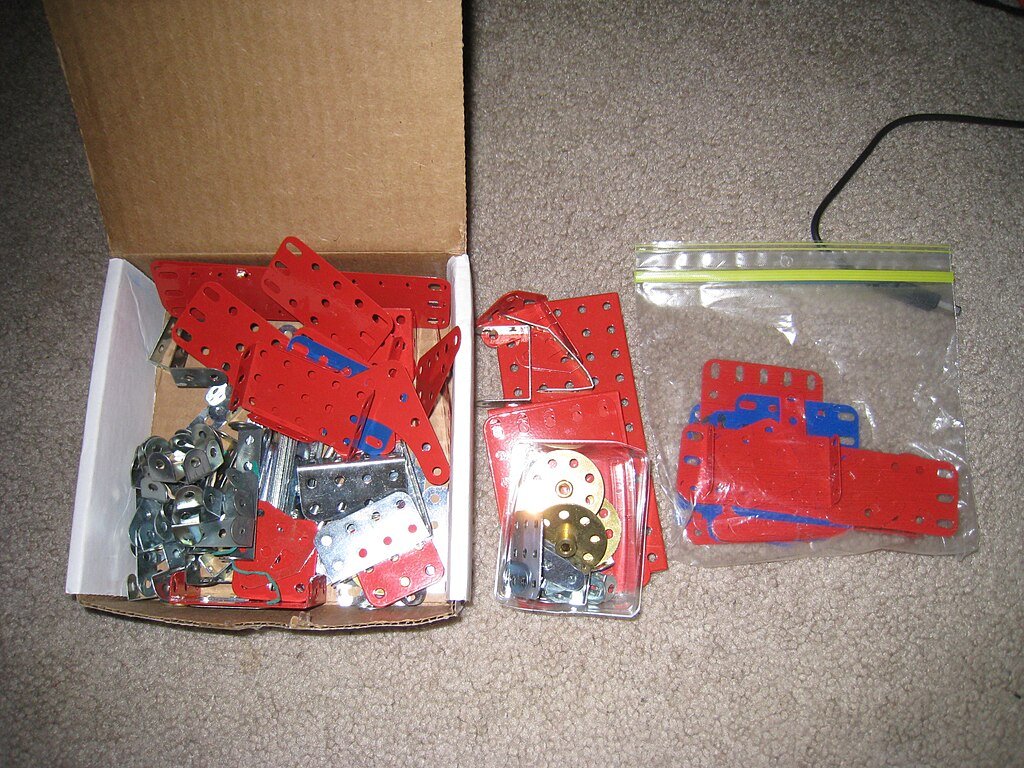
Image: Mwnuk, Erector Set, CC BY-SA 3.0
Ownership Changes and Sales
After decades of inspiring creativity and engineering skills, the Erector Set faced significant challenges in the marketplace. In the 1960s, Gabriel Co. acquired the brand, marking the start of a series of ownership changes that would alter its trajectory. By the 1970s, sales began to decline, ultimately leading to the discontinuation of the Erector Set in 1980, as shifting market dynamics and consumer interests took their toll.
Over the decades, the popularity of Erector Sets grew, establishing them as tools for both education and creativity. In 2000, the brand was acquired by Meccano, a similar European construction toy company, uniting two historic names in creative building play. Modern versions of Erector Sets now incorporate robotics and programming features, blending traditional mechanical construction with today’s cutting-edge technology.
Competition in the Toy Market
In a competitive toy market, Erector Sets battled against notable rivals like Meccano, Lincoln Logs, and Tinkertoys, each offering distinct building experiences. The Erector Set, created by A.C. Gilbert, stood out with its groundbreaking design and the introduction of electric motors, which captivated children fascinated by engineering. Meccano, introduced by Frank Hornby, initially struggled in America but became a direct competitor, leading to Gilbert's acquisition of Hornby's factory.
Wrapping Up
What began in 1913 as a simple yet groundbreaking construction toy has evolved into a tool that blends traditional building with modern technology. By sparking curiosity and encouraging problem-solving, Erector Sets have inspired generations of builders, engineers, and dreamers.