Rubik's Cube: The 1970s Puzzle Toy That Became a Global Obsession
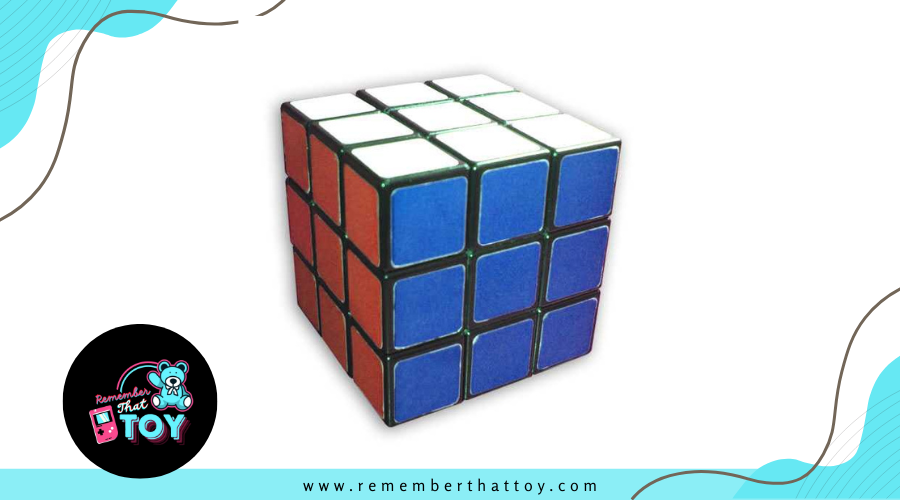
Mike Gonzalez (TheCoffee), Rubiks cube solved, CC BY-SA 3.0
The Rubik's Cube, invented by Ernő Rubik in 1974, began as a teaching tool to help students understand three-dimensional movement. Originally named the Magic Cube, it was made from wood, rubber bands, and paper clips, showcasing a functional and engaging design. The cube features six faces, each with nine stickers in six distinct colors, and is composed of 26 smaller cubes, known as cubies. This ingenious design enables the twisting mechanism that makes the puzzle so captivating.
Rubik's invention includes an internal pivot mechanism, allowing independent rotation of each face, significantly adding to the puzzle's complexity. With over 43 quintillion possible configurations, it quickly became a challenge for puzzle enthusiasts. On January 30, 1975, Rubik filed the original patent for his invention in Hungary, marking a crucial step in its development. This patent paved the way for its commercialization and public release in 1980, transforming it from an educational tool into a globally beloved puzzle toy.
Popularity and Cultural Impact
Exploding in popularity during the 1980s, the Rubik's Cube captivated millions and secured its place as the bestselling puzzle toy of all time. This vibrant puzzle captured imaginations globally, becoming a staple of popular culture. Its allure lies in the challenge it presents, with over 43 quintillion possible configurations.
Three key factors contributing to its cultural impact are:
- Media Attention: The cube was featured in prominent magazines like Scientific American and was inducted into the US National Toy Hall of Fame in 2014, cementing its association with intelligence and creativity.
- Internet Resurgence: The 21st century saw a revival of interest through online communities sharing solving techniques, leading to a significant increase in sales in the US between 2001 and 2003.
- Competitive Scene: Speedcubing competitions have garnered a global audience, showcasing incredible solving times, with the current record being just 3.47 seconds.
The Rubik's Cube transcends its status as a mere toy, remaining a cultural icon that continues to inspire and challenge enthusiasts worldwide.
Mathematical Significance
Exploring the combinatorial complexities of the Rubik's Cube reveals a fascinating intersection of mathematics and problem-solving strategies. With approximately 43 quintillion possible configurations, it presents a formidable challenge even for seasoned solvers. The cube's structure, comprising 8 corner pieces and 12 edge pieces, necessitates intricate permutation calculations, underscoring its mathematical significance.
Here are three key aspects to consider:
- Permutations: Each twist results in a distinct permutation, offering a vast array of configurations that can be rigorously analyzed mathematically.
- Complexity: Larger cubes, such as the 4x4 and 5x5 variants, introduce additional layers of complexity, demanding more advanced solving strategies.
- Research Interest: The Rubik's Cube serves as a focal point in both recreational mathematics and academic research, illustrating how combinatorial problems can inspire profound mathematical inquiry.
Group Theory Applications
The Rubik's Cube exemplifies group theory principles, demonstrating how twists transform its configuration through mathematical operations. This puzzle highlights combinatorial complexity and the vast scope of group actions. Each move corresponds to an element of a mathematical group, enabling the study of sequences and permutations.
Solving the Rubik's Cube involves algorithms rooted in group theory, revealing effective solving strategies. The cube's structure, consisting of 8 corner pieces and 12 edge pieces, provides a rich context for mathematical exploration. Educators utilize the Rubik's Cube as a teaching tool to explain concepts like symmetries and transformation groups.
Spatial Reasoning Development
The Rubik's Cube enhances your spatial reasoning skills by requiring you to visualize and manipulate three-dimensional objects. As you twist and turn the cube, you engage with complex mathematical concepts such as permutations, symmetry, and transformations. This puzzle not only captivates your imagination but also improves your problem-solving abilities through critical thinking.
Here are three key benefits of using the Rubik's Cube to develop spatial reasoning:
- Understanding Permutations: With 43 quintillion possible configurations, each twist introduces you to the concept of permutations, helping you understand how different moves affect the overall structure.
- Enhancing Logical Thinking: Solving the cube requires a systematic approach, promoting logical reasoning as you analyze potential moves and outcomes.
- Visualizing Spatial Relationships: Manipulating the cube enhances your ability to visualize spatial relationships, crucial in fields such as engineering, architecture, and mathematics.
Market Journey
Introduced in Hungarian toy stores in 1977 as the Bűvös Kocka, it quickly gained traction. In 1979, Tom Kremer spotted the cube and recognized its potential in the U.S. market. He partnered with Ideal Toy Company for production and distribution, leading to its explosive popularity.
By 1983, the Rubik's Cube was everywhere, bolstered by commercials and an animated series, resulting in over 300 million units sold worldwide. This toy became a cultural phenomenon, captivating enthusiasts and casual players alike. However, as trends shifted, the cube faced a decline in popularity.
To protect its legacy and trademark, Rubiks Brand Ltd. was established in 2013, setting a foundation to combat counterfeit versions of the cube. This strategic move revitalized the brand, and current annual sales have reached approximately 10 million units. The Rubik's Cube's market journey illustrates how a simple puzzle toy can evolve into a symbol of creativity and challenge, leaving an indelible mark on toy history.
Resurgence and Modern Influence
Online platforms like YouTube have transformed the Rubik's Cube into a global phenomenon, connecting enthusiasts through tutorials and fostering a vibrant community. This digital age revival has breathed new life into the classic puzzle, making it more accessible than ever. As a result, countless resources are available to improve your skills and join a worldwide network of fans who share your passion.
Here are three key factors that have contributed to this resurgence:
- Authentic Products: The establishment of Rubik's Brand Ltd. in 2013 has helped combat counterfeits, ensuring you can purchase genuine Rubik's Cubes and experience their quality.
- Cultural Exposure: Documentaries like 'The Speed Cubers' have highlighted the exciting world of competitive cubing, attracting new fans and inspiring many to take up the challenge.
- Strong Sales: With around 10 million Rubik's Cubes sold each year, the puzzle remains a staple in toy markets, proving its lasting appeal.
In this digital age, the Rubik's Cube continues to unite a global community of enthusiasts, making it an enduring symbol of creativity and challenge.
Speedcubing Competitions Growth
Since the establishment of the World Cube Association (WCA) in 2004, these competitions have flourished, tapping into a vibrant global community of cubers.
With the current world record for the fastest 3x3 solve at an astonishing 3.47 seconds, competitors are clearly dedicated to mastering advanced solving techniques. Annual events attract participants from around the globe, with live streams allowing fans to witness record-breaking moments in real time.
Here's a snapshot of the speedcubing world:
| Competition Type | World Record Time | Unique Challenges |
|---|---|---|
| 3x3 Speedcubing | 3.47 seconds | Blindfolded Solving |
| 2x2 Speedcubing | 0.49 seconds | One-Handed Solving |
| 4x4 Speedcubing | 16.79 seconds | Fewest Moves Challenge |
| 5x5 Speedcubing | 28.58 seconds | Multi-Cube Solving |
Social media continues to foster the sharing of techniques, making the speedcubing culture more dynamic than ever.
Variations and Competitions
Variations of the Rubik's Cube have sparked creativity and innovation, leading to a vibrant world of competitions that challenge enthusiasts at every level. Beyond the classic 3x3 cube, you'll find larger versions like the 4x4 and 5x5, as well as different shapes such as the Pyraminx and Megaminx, each presenting unique solving challenges. For those into speedcubing, the current world record for the fastest 3x3 solve stands at an astonishing 3.47 seconds.
The competitive scene is thriving, thanks to the World Cube Association (WCA), established in 2004. The WCA oversees official Rubik's Cube competitions, standardizing rules and organizing events worldwide. Competitions include diverse events like blindfolded solving and one-handed solving, each showcasing a wide range of skills and techniques.
Additionally, themed cubes featuring designs from pop culture icons or franchises have entered the market, appealing to both collectors and fans. Whether you're a seasoned competitor or just starting, the world of Rubik's Cube variations and competitions offers something for everyone, igniting a passion for this iconic puzzle.
Conclusion
The Rubik's Cube isn't just a puzzle; it's a symbol of creativity and resilience. From its origins as a teaching tool to becoming a global phenomenon, it has captivated minds across generations. Its mathematical complexity and vibrant community continue to inspire, proving its enduring relevance. As you twist and turn those colorful squares, you become part of a legacy that connects the past and future of play.