How Speak & Spell Redefined Educational Toys in the 1970s
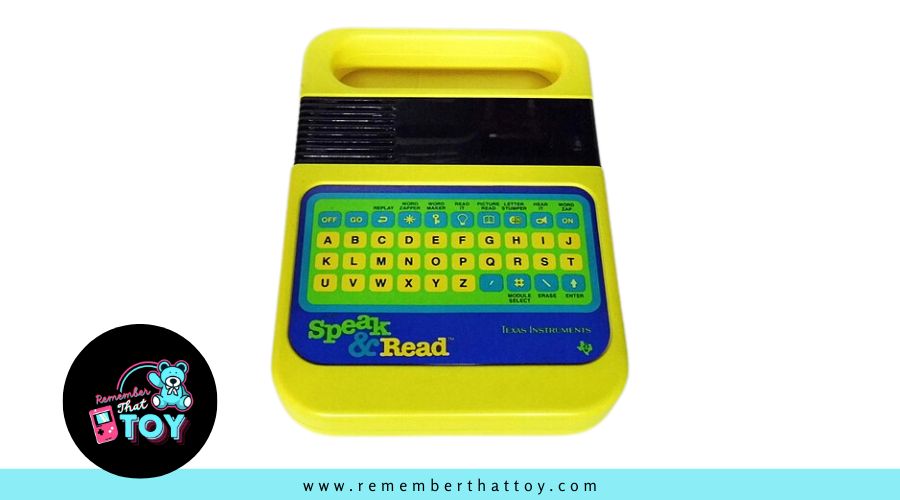
The development of Speak & Spell began in 1976, spearheaded by a small team at Texas Instruments led by Paul Breedlove, with a modest initial budget of $25,000. The aim was to create an innovative educational toy that would make learning enjoyable for children. By leveraging TI’s Solid State Speech technology, Speak & Spell became the first educational toy to feature speech that wasn’t recorded on tape. Instead, it stored entire words in a solid-state format, marking a significant technological advancement.
Speak & Spell Variants
Over the years, several distinct versions of the Speak & Spell were released, each enhancing the educational experience for children in unique ways. These different models kept the learning process engaging and up-to-date:
- Original Speak & Spell (1978) - The pioneering model that initiated the series, focusing on spelling and pronunciation.
- Speak & Spell Compact (1982) - A more portable version that retained the essential educational features while enhancing convenience.
- Super Speak & Spell (1989) - Introduced an LCD screen and a QWERTY keyboard, making interaction more intuitive for children.
- Spanish Speak & Spell (1992) - Tailored for Spanish-speaking users, demonstrating the brand’s global adaptability.
These versions catered to various preferences and expanded the vocabulary and language options for young learners. With a total of 24 cartridges available throughout its production, each Speak & Spell model enriched the educational experience, ensuring that children from diverse backgrounds could benefit from this innovative toy.
Unique Game Cartridges
The Speak & Spell series not only evolved through varied models but also offered unique game cartridges that broadened its educational capabilities. With a total of 24 cartridges designed for multiple languages and hardware versions, users could easily expand their vocabulary beyond the built-in words. Each cartridge introduced supplementary words and interactive games, enhancing the learning experience and catering to different learning styles.
These cartridge-based systems were particularly appealing because they were compatible across regions without any regional lockout. This allowed for global sharing and usage, fostering a sense of community among Speak & Spell users. One notable variant, aimed at the Spanish market, was released as part of the series’ final redesign in 1992, demonstrating the device’s adaptability to different languages.
Some cartridges included unique educational games like Mystery Word and Secret Code, which reinforced learning through interactive play. By incorporating these engaging educational games, the Speak & Spell made learning enjoyable and effective. These unique game cartridges played a crucial role in the Speak & Spell’s enduring success and appeal.
Technical Specifications
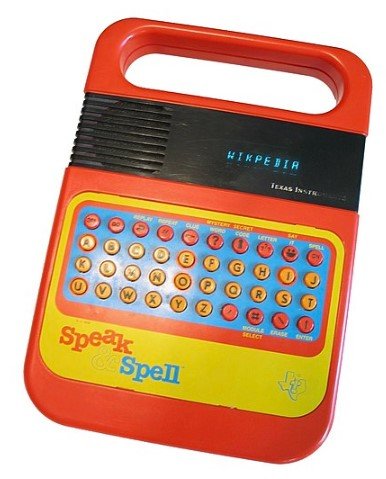
Leveraging advanced technology for its time, Speak & Spell featured the TMC0280 chip, later identified as the TI TMS5100, which enabled lifelike speech synthesis through linear predictive coding. This groundbreaking feature marked a significant advancement in educational toys, allowing children to interact with language in an engaging manner.
Key technical specifications that defined Speak & Spell include:
- Memory: The device stored speech data on two 128 Kbit metal gate PMOS ROMs, which represented the largest capacity ROM available at its release.
- Display: The original unit was equipped with a vacuum fluorescent display (VFD) capable of showing 8 characters. Later models upgraded to an LCD display capable of displaying 16 characters.
- Audio Processing: A custom digital signal processing (DSP) chip, developed by Texas Instruments, synthesized audio at a rate of approximately 1,000 bits per second.
- Power Options: Speak & Spell could be powered by 4 C-cell batteries or an AC adapter and included a headphone jack for private listening.
These specifications significantly enhanced its educational value and user-friendliness.
Cultural Impact and Legacy
Its appearance in the 1982 film E.T. the Extra-Terrestrial catapulted the toy into the spotlight, making it a household name. This cultural impact extended further; its distinctive robotic voice and speech synthesis technology inspired musicians like Kraftwerk and Beck, who incorporated its sounds into their tracks, blending educational technology with the music scene.
As a collectible item, Speak & Spell has found a place in prestigious electronics museums, including the Computer History Museum and the Smithsonian, highlighting its historical importance. The circuit-bending community also embraced the toy, modifying it to create unique sound effects that influenced genres like electronic and synthpop music.
Educational Effectiveness
While many children enjoyed using Speak & Spell, research shows its educational effectiveness was limited as gains in spelling proficiency faded once the device was no longer in use. Here are some key points to consider:
- Temporary Gains: Initial studies indicated that while the toy enhanced spelling skills during use, these improvements didn’t last.
- Word Exposure: Speak & Spell taught over 200 words, providing a foundation for early language acquisition, particularly for children aged 7 and older.
- Interactive Learning: The device engaged users through games like Mystery Word and Secret Code, promoting an interactive approach to learning spelling.
- Long-term Limitations: The effectiveness of Speak & Spell diminished greatly after users stopped engaging with it, revealing its inability to sustain educational benefits.
In essence, while Speak & Spell offered a fun, interactive way to learn spelling, its long-term educational impact was questionable. It provided immediate gratification but lacked the depth needed for lasting proficiency. Traditional methods likely proved more effective for sustained learning, as reliance on the device didn’t translate into ongoing spelling success.
Home Computer Adaptations
Home computer adaptations of Speak & Spell have transformed this classic educational toy into versatile learning tools, integrating its unique features with personal computing systems. Hardware and software interfaces such as the Speak-2-Me-2 card for TRS-80 and Texas Instruments’ speech synthesizer accessory for the TI-99/4A facilitate easy connections between Speak & Spell and home computers. Detailed instructions for interfacing with Sinclair ZX-80 and ZX-81 were published as early as 1983, underscoring its adaptability beyond the original design.
The rise of emulators like MESS and SASS enables the original Speak & Spell code to run on modern systems, providing a nostalgic yet functional experience. For those who prefer online interactions, simulations such as Speak & Spell Online, created using Flash or JavaScript, cater to both nostalgic users and educational contexts.
Emulation and Simulation
Emulation and simulation of the Speak & Spell have rejuvenated this iconic educational toy, making it accessible to both a new generation of learners and nostalgic users. Here’s why this is significant:
- Preservation: Emulation via MESS allows the original Speak & Spell code to run on modern systems, ensuring the toy’s educational benefits endure.
- Nostalgia: Online simulations like SASS and Speak & Spell Online, using Flash or JavaScript, evoke memories while providing an engaging learning experience.
- Adaptability: Hardware solutions like the Speak-2-Me-2 card for TRS-80 demonstrate how Speak & Spell can interface with home computers, blending old and new technologies.
- Accessibility: Numerous online emulators make it easy to access the Speak & Spell experience for both educational and nostalgic purposes.
These emulations and simulations preserve the essence of the Speak & Spell, enhancing learning by making it interactive and enjoyable. They bridge the gap between past and present, ensuring that learners and nostalgic users alike can enjoy this timeless educational tool.
Circuit Bending Potential
The Speak & Spell’s accessible circuitry makes it a prime candidate for circuit bending and artistic exploration. When you delve into modifying this iconic toy, you’ll find that its simple design allows for extensive alterations. Pioneer Reed Ghazala recognized this potential soon after the device’s release, demonstrating how it can be transformed into a unique instrument for sound experimentation.
With its speech synthesis technology and audio feedback capabilities, the Speak & Spell is ideal for producing a wide array of unpredictable sounds. Rewiring or adding components can push the boundaries of its original educational purpose, enabling you to create eerie, glitchy soundscapes perfect for various creative projects—whether you’re a musician, artist, or hobbyist.
Engaging in circuit bending with the Speak & Spell continues to inspire innovation, showcasing how an educational toy can be repurposed into a tool for artistic expression. Through playful experimentation, you can join a community of creators who appreciate the beauty of sound and enjoy transforming the ordinary into the extraordinary.
Pricing and Collectibility
Vintage Speak & Spell toys have become increasingly desirable among collectors, with prices varying significantly based on condition and rarity. If you’re considering investing in this vintage computing gem, here are some key pricing insights:
- Working Models: These typically range from $30 to $80, depending on their condition.
- Original Packaging: Models with their original boxes and booklets can command higher prices, reflecting their collectible status.
- Unique Editions: Special editions like ‘Vowel Power’ or those with extra cartridges are particularly sought after and can attract higher bids.
- eBay Market Activity: Prices fluctuate frequently due to limited production runs and active collector interest.
A ‘tested and working’ status significantly enhances desirability compared to those labeled ‘not working.’ Collecting Speak & Spell isn’t just about nostalgia; it’s a chance to own a piece of educational history. Whether you’re a seasoned collector or just starting, understanding these trends can help you make informed decisions.
Condition-Based Value
The condition of a vintage Speak & Spell is a significant factor in determining its value and collectibility. Collectors must carefully evaluate each unit, as working models are highly sought after, while non-functional or repair-needed units typically command lower prices. For serious collectors, items in excellent condition can substantially increase the value of their investment.
Here’s a brief overview of how condition influences pricing:
| Condition | Estimated Value |
|---|---|
| Tested and Working | $30.00 - $80.00 |
| Not Working | $10.00 - $30.00 |
| With Original Packaging | $80.00 - $220.00 |
| Complete Set | Up to $220.00 |
| Functional Buttons | Premium Pricing |
Models that include original packaging and documentation are especially prized. These elements not only enhance the aesthetic appeal but also significantly elevate the item’s market value. Therefore, when considering a purchase, always assess the condition and completeness of the Speak & Spell.
Influence on Future Toys
How did Speak & Spell transform the way future educational toys engage children in learning? By introducing solid-state speech technology, it set the stage for interactive learning without the need for moving parts. This innovation not only captivated young minds but also reshaped consumer expectations for educational toys. Its success paved the way for a series of devices like Speak & Read and Speak & Math, which seamlessly blended fun with learning.
The incorporation of games and activities in Speak & Spell opened doors for gamification strategies in future toys. Developers now realized that educational engagement could be optimized through playful interactions. Here’s a quick look at how Speak & Spell influenced future educational toys:
| Influence Area | Speak & Spell Contribution | Future Developments |
|---|---|---|
| Technology | Solid-state speech technology | Voice recognition and AI integration |
| Learning Approach | Interactive learning through gameplay | Adaptive learning and personalized experiences |
| Design | Handheld, portable device | Sleek designs with touch screens |
| Cultural Impact | Featured in media, e.g., E.T. | Crossovers with popular franchises |
All these elements combined truly transformed the landscape of educational toys.
Conclusion
Speak & Spell is not merely an educational toy but a revolutionary technology that transformed children’s learning experiences. Its innovative combination of entertainment and education made spelling enjoyable, and its advanced design set the standard for future interactive devices.