How RC Helicopters Took Flight as a Popular Tech Toy
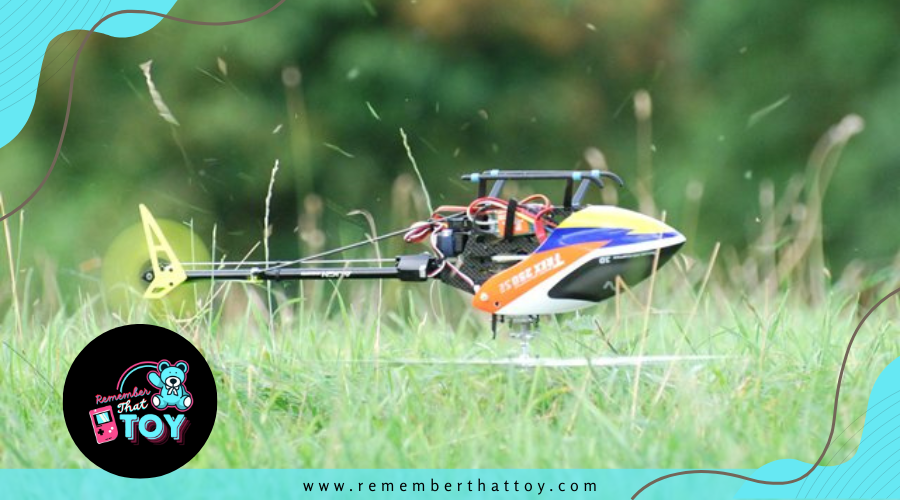
The rise of RC helicopters has transformed them into a beloved tech toy for enthusiasts around the world. With viral videos showcasing their impressive 3D aerobatic capabilities, these helicopters have captured the attention of both tech lovers and hobbyists. You'll find that there's a lot of excitement surrounding the advanced technology found in models like the Mikado Logo 700, designed specifically for high-performance flying.
Key advancements in control mechanisms, particularly the collective and cyclic pitch controls, have made it easier for newcomers to grasp and execute challenging maneuvers. This accessibility is essential, as it opens the door for many to join the hobby. Plus, the durability of RC helicopters—thanks to high-strength carbon fiber and fiberglass blades—means you can perform high-stress flights without worrying about frequent breakages.
And let's not forget the powerful motors, like the Scorpion motor, paired with high-capacity lithium polymer batteries that improve flight times and performance. The combination of these features solidifies RC helicopters as a favorite tech toy in the current market.
Image: Jblackmore at English Wikipedia< /a>, Align Trex 250 RC Helicopter flying inverted, CC BY-SA 3.0
The Thrill of 3D Flying
Soaring through the air with precision and skill, 3D flying offers an exhilarating experience that pushes the limits of what RC helicopters can do. This advanced flying style involves mastering aerobatic techniques like inverted flight, flips, and rolls, showcasing not just the helicopter's agility but also your pilot skill.
To truly excel in 3D flying, you need to develop exceptional maneuver precision. The Mikado Logo 700, engineered specifically for 3D aerobatic flying, is a favorite among enthusiasts for its impressive performance capabilities. Its advanced swashplate system allows for quick pitch and direction changes, enabling you to execute intricate aerial tricks with finesse.
Understanding Control Mechanisms
Mastering control mechanisms is fundamental for effectively piloting RC helicopters. Understanding how your inputs translate into flight is key to enjoying this thrilling hobby. Here's what you need to focus on:
- Collective Pitch Stick: Controls vertical movement for ascents and descents.
- Cyclic Pitch Stick: Manages horizontal navigation for forward, backward, and lateral movement.
- Swashplate Mechanics: Critical for translating your stick movements into pitch adjustments for the rotor blades.
The swashplate mechanism is the heart of your helicopter's control system. It converts the movements of the collective and cyclic pitch sticks into precise pitch adjustments. This translates into how your helicopter moves through the air. Control precision is essential, especially when you're executing complex 3D aerobatic maneuvers like flying upside down or making sharp turns.
As you practice, you'll notice how slight adjustments can lead to significant changes in your helicopter's flight path. The relationship between your inputs and the swashplate's response is what allows for smooth, controlled flying. So, get familiar with these mechanisms, and you'll be well on your way to becoming a skilled pilot.
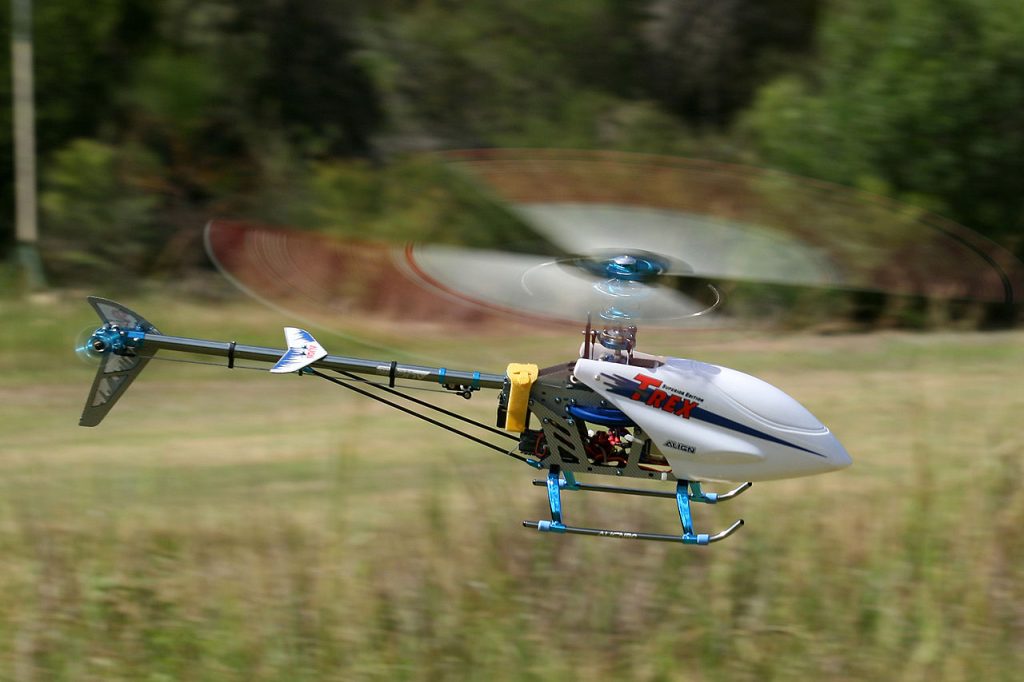
Image: Mike Lehmann, Mike Switzerland 00:18, 5 March 2007 (UTC), Align T-REX 2386, CC BY-SA 3.0
Importance of Tail Rotor
A well-functioning tail rotor is crucial for maintaining control and stability in RC helicopters. The tail rotor mechanics play a critical role in counteracting the torque produced by the main rotor, which helps prevent unwanted spinning during flight. Operating between 8,000 to 10,000 RPM, the tail rotor spins notably faster than the main rotor, providing the necessary force for effective yaw control.
When you adjust the left stick on your radio controller, you're directly influencing the pitch of the tail rotor. This adjustment gives you the ability to control the helicopter's direction, ensuring smooth and precise maneuvers. Without a properly functioning tail rotor, executing complex 3D maneuvers would be nearly impossible, as it improves overall flight stability.
Moreover, the design and efficiency of the tail rotor mimic those found in full-sized helicopters, highlighting its importance in both scale models and realistic aviation experiences. Essentially, effective torque management through the tail rotor is what allows you to fly your RC helicopter with confidence and precision.
Blade Design and Performance
Blade design plays a significant role in the performance of RC helicopters, greatly impacting lift and maneuverability. The right blades can make all the difference when you're trying to execute complex aerobatic maneuvers. Here are some vital factors to contemplate:
- Blade Materials: High-strength materials like carbon fiber and fiberglass are commonly used, ensuring durability during intense flying conditions.
- Aerodynamic Efficiency: Well-engineered blades improve lift and stability, allowing for smoother shifts and agile movements.
- Design Innovations: Advances in blade design have led to improved responsiveness, making it easier to master intricate flight patterns.
Motor Power and Efficiency
In relation to RC helicopters, motor power and efficiency are fundamental for ideal flight performance. Powerful Scorpion motors provide about one horsepower for every pound of the helicopter, delivering impressive motor torque that improves flight stability and responsiveness. These motors maintain a consistent RPM of 2,000, which is critical for both novice and experienced pilots looking to master diverse maneuvers.
The use of lithium polymer (LiPo) batteries further amplifies this performance. With the ability to supply up to 50 volts of power, these batteries greatly improve your helicopter's flight duration and complete capabilities. A typical battery capacity of 5,000 milliamp hours offers enough power to rival jumpstarting a vehicle, enabling you to enjoy extended flying sessions without frequent battery discharge.
To achieve high RPMs necessary for advanced maneuvers, the efficiency of both the motor and power supply systems is significant. This performance optimization guarantees you maintain control during complex 3D flying, making every flight an exhilarating experience. When you combine robust motor power with efficient energy use, you get an RC helicopter that truly soars above the rest.
Safety Features and Considerations
Models like the Mikado Logo 700 are built with durable materials such as carbon fiber and fiberglass, which help withstand crashes and reduce injury risks. Many helicopters include safety features like blade guards and soft landing gear, minimizing damage to the helicopter and protecting bystanders during mishaps.
Crash prevention starts with pilot training; practicing in open areas free from obstacles and crowds is critical. This helps you mitigate risks associated with loss of control or mechanical failure during flight. Regular maintenance and pre-flight inspections are just as significant. Before each flight, check the battery, blades, and control mechanisms to verify everything is in working order.
Additionally, many RC helicopters come equipped with fail-safe systems that activate when the signal is lost. This feature guarantees your helicopter safely lands or hovers instead of crashing unexpectedly. By prioritizing these safety measures, you can improve your flying experience and enjoy your time in the air while minimizing risks.
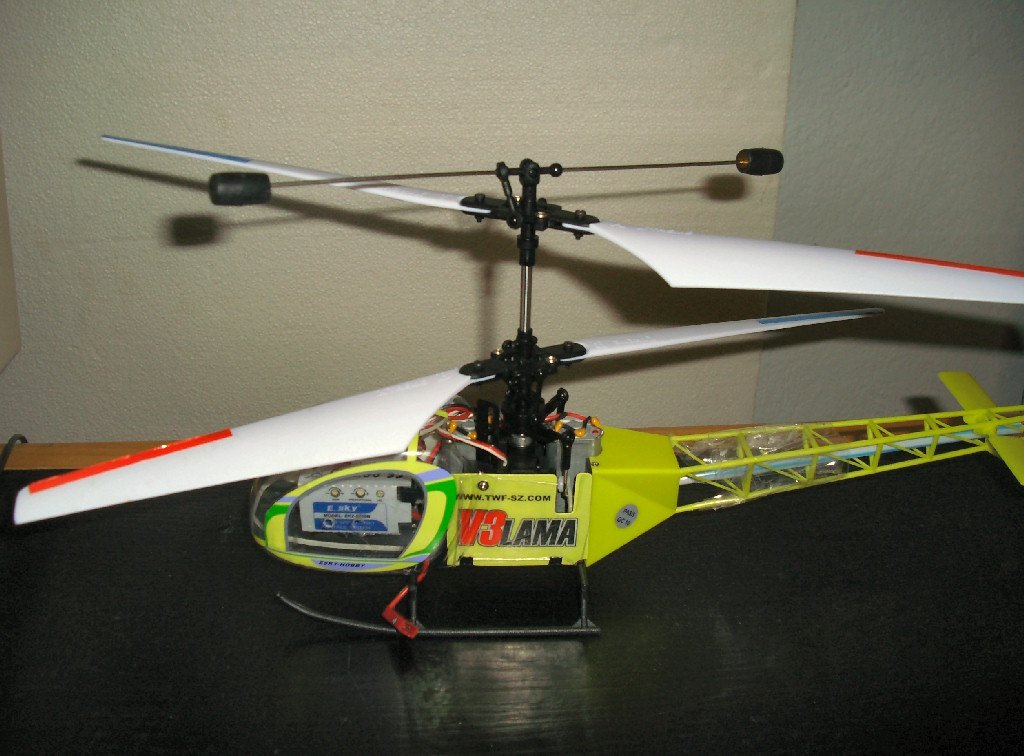
Image: anonymous, LamaV3Coax, CC BY-SA 3.0
Wrapping Up
RC helicopters have become a favorite toy for hobbyists because they are exciting, advanced, and fun to use. Their ability to perform amazing tricks and smooth flights makes them a thrilling choice for anyone who loves flying. With durable designs, powerful motors, and safety features, they’re built to handle both beginners and experts.