How LEGO Boost Robotics Kits Inspired Future Engineers
LEGO Boost Kits ignite creativity and learning for kids ranging from 7 to 12 by combining traditional building with robotics. These kits are perfect for children enthusiastic to investigate engineering concepts while having fun. With motors and programmable bricks, you can create interactive models that not only look great but also improve playability. Imagine building dynamic toys that react to their environment—LEGO Boost makes that possible with its motion-sensitive capabilities.
What's even cooler is that these kits are compatible with existing LEGO sets, allowing you to expand your creativity by integrating new robotic features into your previous builds. The accompanying app adds a whole new dimension, enabling you to record your voice and program unique sounds and actions for your creations. This hands-on learning experience introduces foundational concepts of robotics and STEM education in an engaging way.
Educational Benefits of LEGO Robotics
View this post on Instagram
Frequently, kids who engage with LEGO Boost Robotics Kits find themselves enveloped in a world of hands-on learning that seamlessly blends building and programming. These kits introduce foundational concepts in robotics and engineering, making learning both fun and effective. As they construct and program their robots, children improve their problem-solving skills, allowing them to experiment and innovate.
Research shows that participation in LEGO Robotics programs significantly enhances spatial reasoning abilities, which are crucial for success in mathematics and engineering disciplines. Working with these kits encourages teamwork and collaboration during group projects, fostering communication skills that are important in both educational and professional settings.
Moreover, the experience of building and coding increases confidence in young learners. As they tackle challenges and overcome obstacles, they develop critical thinking abilities that will serve them in diverse aspects of life. The introduction to STEM principles through these kits enhances understanding of robotics, similar to how Magformers inspire creativity and exploration.
Key Components of LEGO Boost
The key components of LEGO Boost Robotics Kits often captivate young builders and budding programmers alike. At the heart of the kit is the programmable brick, known as the Boost Brick, which acts as the brain of your creations. This intuitive device allows you to input coding instructions through a user-friendly app, making programming accessible for young learners between 7 and 12 years old.
With LEGO Boost, you can incorporate various motors to bring your interactive models to life, enabling movements and actions that respond to your commands. The kit also includes advanced sensors, like motion and color sensors, which allow your models to react dynamically to their environment.
These components introduce fundamental robotics concepts while keeping the experience engaging and fun.
What's even better is that LEGO Boost is compatible with existing LEGO sets. This compatibility improves creativity and broadens the possibilities for building unique projects. By combining traditional building with robotics, you'll find endless opportunities to investigate and innovate, paving the way for future engineers in an exciting and hands-on manner.
Furthermore, LEGO's commitment to sustainability is evident in its efforts to produce all core products from sustainable materials by 2030, encouraging young engineers to consider environmental impacts in their creations.
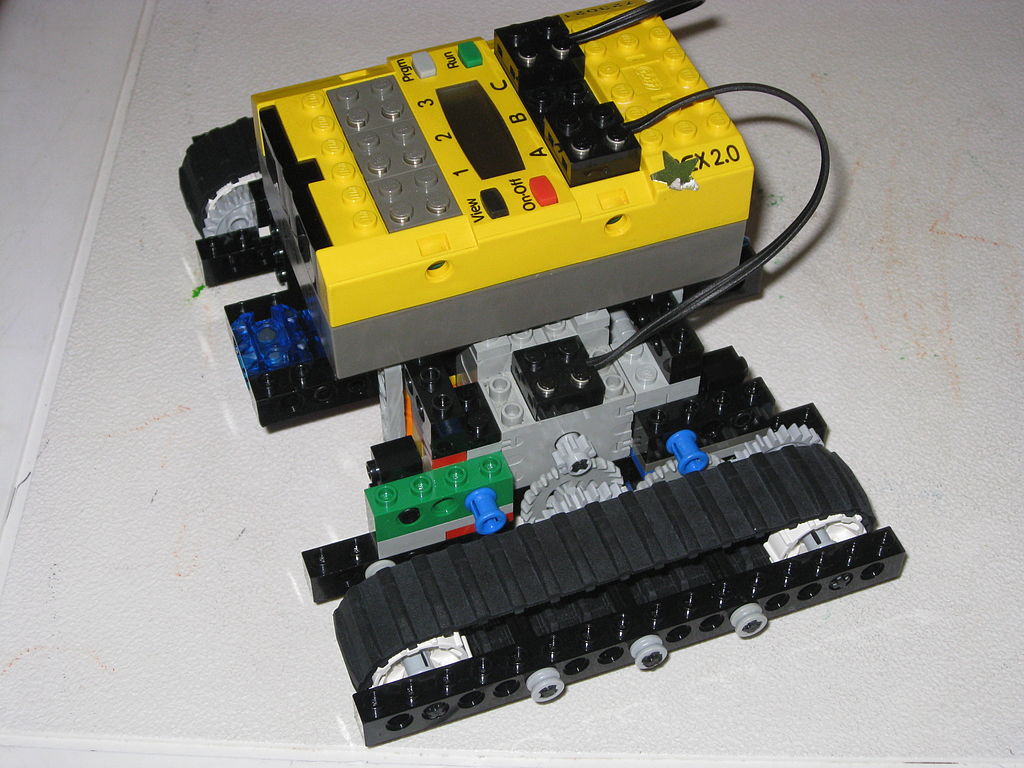
Image: Legoktm ( Talk | Contributions | enwp ), Lego Roverbot , CC BY-SA 3.0
Hands-On Learning Experiences
Hands-on learning experiences are at the core of what makes LEGO Boost Robotics Kits so engaging and effective for young builders. With these kits, you get to build and program robots, turning ideas into tangible creations. This hands-on approach fosters creativity and engineering skills from an early period, allowing you to investigate your groundbreaking side.
As you work with LEGO Boost, you'll uncover motors and sensors that enable interactive play. This encourages you to experiment with your designs, learning through trial and error. With the user-friendly app, coding becomes accessible and enjoyable, making complex programming concepts easier to grasp.
Moreover, engaging in hands-on activities with LEGO Boost improves your spatial reasoning skills, which are crucial for success in mathematics and engineering fields. As you construct and refine your robots, you'll develop a stronger understanding of the space around you and how different components fit together.
Additionally, inquiry-based learning fosters observation and questioning, which are essential components of STEM education.
Teamwork and Collaboration Skills
Working with LEGO Boost Robotics Kits naturally leads to opportunities for teamwork and collaboration. When you engage in hands-on projects, you'll find yourself working alongside your peers to design, build, and program your robotic creations. This environment fosters vital communication skills, helping you share ideas, delegate tasks, and provide constructive feedback.
Moreover, steering through differing opinions during group projects helps you develop valuable problem-solving and conflict-resolution skills. This process is fundamental as you learn to listen to others while advocating for your ideas. Engaging with LEGO Boost also encourages peer mentorship, where more experienced teammates guide you, creating a dynamic of leadership and collaboration.
Additionally, interactive toys like Little Live Pets encourage imaginative play and problem-solving, enhancing cognitive development and learning through play.
Competitions and Community Engagement
Participating in competitions with LEGO Boost Robotics Kits offers students a chance to apply their creativity and ingenuity in real-world scenarios. These events not only enhance engineering capabilities but also foster community engagement and teamwork among peers. Here's how you can benefit:
- Enhance Problem-Solving Skills: Competitions challenge you to think critically and devise creative solutions to complex problems.
- Showcase Creativity: You get to present your unique designs and ideas, which can lead to recognition and even scholarships in STEM fields.
- Develop Teamwork Abilities: Working in teams teaches you crucial collaboration and communication skills, which are important for future engineers.
- Build a Supportive Network: Engaging with educators, parents, and industry professionals creates a community dedicated to inspiring the next generation of engineers.
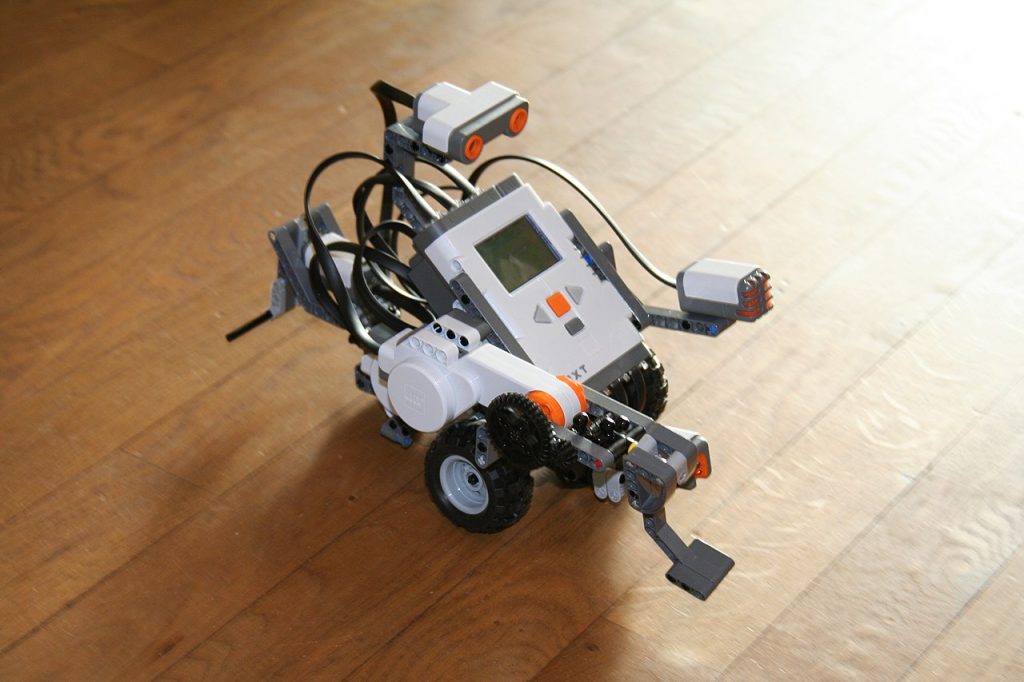
Image: Eirik Refsdal from Trondheim, NORWAY, Lego Mindstorms Nxt-FLL, CC BY 2.0
Wrapping Up
If you're new to robotics, getting started is easier than you might think. The LEGO Boost Robotics Kit is designed for kids between 7 and 12 years old, providing a hands-on experience that makes learning fun. The kit's visual programming interface simplifies coding for beginners.
As you build dynamic models using motors and sensors, you'll see firsthand how your creations can respond to their environment. This interactive approach not only introduces you to robotics engineering but also helps develop critical thinking and problem-solving skills vital for future success in STEM fields. Plus, the LEGO Boost kit is compatible with existing LEGO sets, so you can improve your designs and let your creativity soar.