How Geometric Stacking Toys Encouraged Problem-Solving

Geometric stacking toys play an essential role in early childhood development. These toys aren't just fun; they're important for enhancing your child's problem-solving skills. As kids experiment with balance and stability while stacking, they learn to navigate challenges and strategize solutions. When a structure collapses, they'll adjust their approach, fostering critical thinking and resilience.
Engaging with geometric stacking toys also introduces foundational concepts in geometry, like size and shape—necessary for early mathematical understanding. By manipulating multiple geometric shapes, your child develops fine motor skills as they grasp, lift, and place each piece. This hands-on interaction not only supports physical skills development but also promotes cognitive growth by encouraging logical reasoning and pattern recognition.
Magnetic attraction ensures strong, stable connections for smooth building, offering endless possibilities for creativity. So, encourage playtime with these toys and watch your child thrive as they navigate their way through exciting challenges!
Developmental Milestones in Stacking
Stacking toys are a fundamental tool for tracking developmental milestones in young children. Typically, you'll see your child begin stacking around 13 to 15 months, marking a significant phase in their cognitive development. As they engage in stacking, they improve their fine motor skills, learning to manipulate objects with increasing precision.
This milestone not only enhances their coordination but also indicates readiness for more complex tasks. As your child stacks, they boost their problem-solving skills and spatial awareness. They learn to balance and stabilize their structures, which fosters persistence and resilience. When a tower topples, your child doesn't just give up; they try again, developing a mindset that's crucial for future challenges.
Moreover, introducing geometric shapes through stacking toys helps children develop early shape recognition, laying a solid foundation for future learning in math and science. Similar to stacking toys, kinetic sand provides a multi-sensory approach to learning and development, enhancing fine motor skills and promoting imaginative play.
Cognitive Skills Enhanced by Stacking
Sorting shapes becomes an exciting challenge. Your child learns to identify and differentiate between sizes and shapes, fostering visual discrimination and critical thinking. This engagement promotes resilience as they persist through collapses, learning valuable lessons about stability along the way. They'll also boost their spatial awareness and cognitive mapping, determining the best ways to fit shapes together.
Furthermore, these toys support early mathematical skills by encouraging your child to recognize patterns and relationships among different shapes. In this playful environment, stacking toys become tools not just for fun but for developing critical cognitive skills that will benefit your child throughout their learning expedition.
Emotional Growth Through Play
As children tackle the challenges of stacking geometric shapes, they experience a sense of success that elevates their self-esteem and fosters emotional resilience. This expedition of problem-solving not only improves their ability to think critically but also builds their confidence in overcoming obstacles.
Engaging with these toys encourages independence and creativity, allowing kids to express themselves freely during self-directed play. When they play cooperatively, they develop crucial communication skills and deepen their emotional understanding of their peers. Through these interactions, children learn to navigate social dynamics, which is critical for their emotional growth.
Varieties of Stacking Toys Available
What types of geometric stacking toys can you examine to improve your child's playtime experience? There's a wide selection available that can augment your child's learning and creativity. Traditional wooden blocks are a classic choice, providing a sturdy base for imaginative play while also boosting fine motor skills. These blocks come in different shapes and sizes, allowing for endless construction possibilities.
You might also investigate multi-functional stacking toys. These often incorporate elements like sound and texture, offering varied sensory experiences that engage your child's curiosity. Themed stacking toys, such as those featuring animals or vehicles, are particularly popular since they further encourage imaginative play and cognitive development.
By selecting a range of stacking toys, you'll be fostering creativity and problem-solving skills while keeping playtime enjoyable and educational. Much like the Corn Popper Toy, geometric stacking toys are celebrated for their ability to enhance coordination and motor skill development in toddlers.
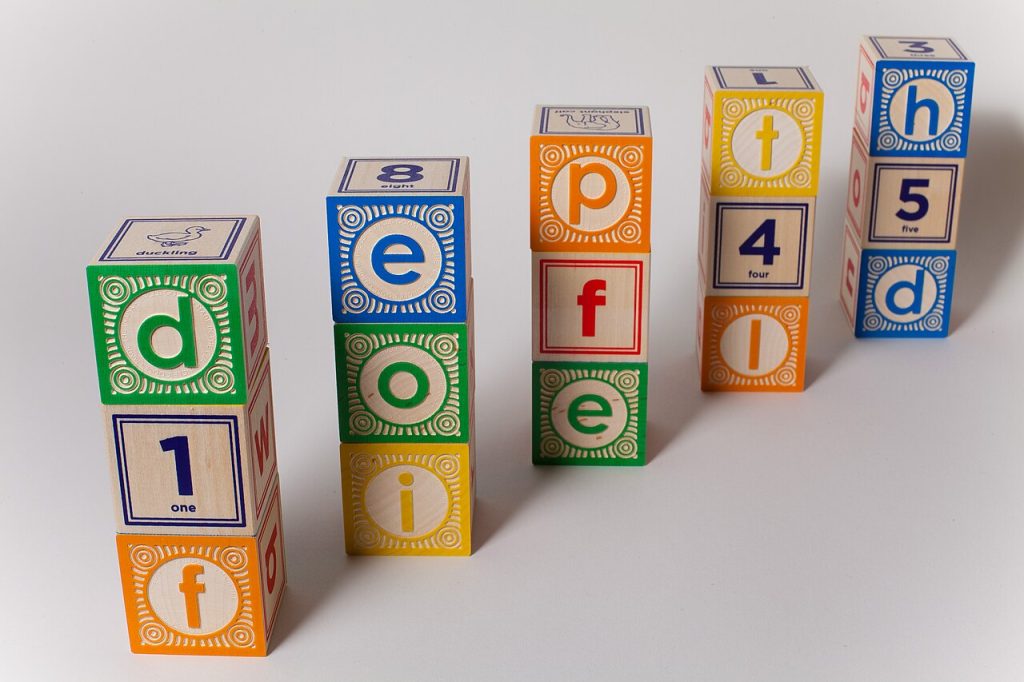
Image: Alex1ruff, Dof blocks f22, CC BY-SA 4.0
Engaging Activities for Children
Through engaging in activities with geometric stacking toys, children can investigate their creativity while improving critical cognitive skills. These toys encourage young children to experiment with balance and stability, which sharpens their problem-solving skills.
By engaging in trial-and-error play, kids learn persistence and resilience, especially when their structures collapse. They'll quickly realize that not every arrangement works, leading them to try new approaches. Furthermore, while playing with geometric stackers, children practice color recognition and categorization, which develops their vocabulary and communication skills.
You can also introduce storytelling into their playtime. As they build their structures, encourage them to create narratives around their creations. This not only makes the playtime imaginative but also promotes critical thinking as they think about the story behind their designs. In a similar way, Fisher-Price Little People inspire imaginative play and storytelling, helping children to enhance their cognitive and motor skills.
Selecting the Right Stacking Toys
When choosing stacking toys for your child, consider their developmental stage to confirm you're capturing their interest and promoting skill acquisition. Selecting the right stacking toys can make a significant difference in their learning experience. Look for toys that feature a variety of colors and textures; this will help improve sensory investigation and support cognitive development. Prioritize options made from eco-friendly and durable materials, guaranteeing safety and longevity during playtime.
Multi-functional toys are especially beneficial, as they can teach concepts like size, shape, and balance, enriching the complete learning experience. Research brands are known for quality and safety standards to verify you're providing your child with the perfect toy. These educational stacking toys not only encourage creativity but also help develop crucial skills that foster effective problem-solving. Additionally, incorporating toys like Weebles can promote hand-eye coordination and movement precision, further enhancing their developmental benefits.
Trends in Educational Toy Selection
In recent years, there's been a noticeable shift in how parents approach educational toy selection, with a clear preference for stacking toys that align with their values. You might have noticed that eco-friendly and sustainable materials are becoming increasingly significant. Parents want toys that not only entertain but also promote cognitive skills, and geometric stacking toys have risen to the forefront for their ability to aid in shape recognition and problem-solving.
The influence of social media has played a substantial role in this trend, as parenting communities share their experiences and recommendations. Multi-functional stacking toys, which incorporate sound or texture, are also trending. These toys provide different learning experiences and engage children in sensory investigation, enriching their playtime.

Wrapping Up
Parents are drawn to stacking toys that encourage creativity and imaginative play, allowing children to investigate multiple configurations and ideas. This type of play fosters crucial developmental skills while keeping learning fun and engaging. By prioritizing these aspects, you're not just choosing a toy; you're investing in your child's growth and development.
Embracing eco-friendly practices in toy production, such as recycled materials, aligns with the growing desire for sustainability and environmental responsibility in children's products.