Forgotten 60s Learning Toys That Shaped a Generation
The 1960s were a time of big ideas, bold colors, and groundbreaking innovation—not just in culture and technology, but in how children learned through play. Long before smartphones and interactive apps, learning was hands-on, imaginative, and often powered by curiosity.
From science kits and word games to mechanical puzzles and building sets, these classics laid the foundation for problem-solving, creativity, and critical thinking. In this article, we revisit the forgotten learning toys of the 1960s that quietly helped shape a generation of thinkers and dreamers.
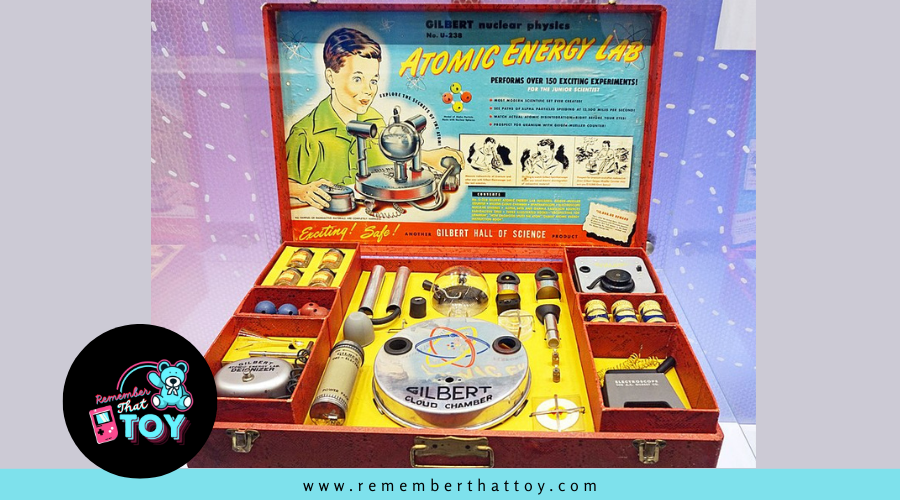
Image: Tiia Monto, Atomic Energy Laboratory, CC BY-SA 3.0
Key Takeaways
- Little Miss Echo featured a voice-recording capability, sparking interactive play with its built-in tape recorder, despite playback issues over time.
- Chatty Cathy used a pull-string mechanism to expand children's vocabulary, making learning engaging with up to 18 phrases by 1963.
- The Sears Typewriter offered practical writing simulation, enhancing typing skills and literacy, accessible to aspiring writers with its affordable pricing.
- The Atomic Energy Lab Kit introduced nuclear science components like Geiger-Müller counters, despite safety criticisms due to its radioactive materials.
- Thingmaker taught children plastic molding and prototyping through hands-on creativity, improving fine motor skills with its variety of molds.
Little Miss Echo: The Voice-Recording Doll
Little Miss Echo captured the fascination of children in the 1960s with her revolutionary voice-recording feature, setting her apart from other dolls of the time. It's intriguing due to her Echo doll features, which included a built-in tape recorder. This voice recording technology allowed you to capture and replay your own voice, creating unforgettable playtime memories.
Little Miss Echo was part of a wave of interactive play innovations that included Chatty Cathy, whose pull-string mechanism marked a technological milestone in toys. The Little Miss Echo Dolls were larger than typical dolls of the era, standing at 13 inches compared to Barbie's 11.5 inches. There's a bit of a mystery surrounding her size, with some sources claiming she stood at 13 inches, while others say 30 inches.
Despite playback issues over time and a high price equivalent to $150 today, her nostalgic toy appeal remains strong. Her market legacy endures, as she continues to remind us of the inventive spirit of the toys from that time period.
Chatty Cathy: The Vocabulary Expander
View this post on Instagram
Chatty Cathy transformed playtime in the 1960s with her groundbreaking pull-string mechanism that brought her to life. As you pulled the string, Cathy's voice encouraged vocabulary development through interactive play. Her internal phonograph played phrases like "Let's play school," offering kids a chance to engage with language in a new way. Kids were engrossed in imaginative scenarios, as her expressions prompted social interactions and roleplay. Chatty Cathy was available in red or blue dresses, which added an element of choice and personalization to playtime. Cathy's ability to speak 11 phrases in 1960, expanding to 18 by 1963, allowed them to investigate different conversational contexts. This doll was an educational tool that made learning fun and accessible. Her diverse appearances only added to her charm, making her a cherished companion in playroom adventures. Similarly, the See 'n Say introduced children to animal sounds and images, enhancing auditory recognition and language development during early childhood. While Chatty Cathy sparked imagination through auditory engagement, the Sears Typewriter invited children to examine the world of written communication. This 1960s learning tool was a gateway to writing practice techniques and educational growth. The Sears Typewriter featured innovations like variable spacing and foreign-language kits, making it perfect for aspiring writers. Known for its electric type with a manual return handle, the typewriter offered a unique blend of modern and traditional typing experiences. Consider these aspects: Engage with this classic, and investigate how it shaped a generation. The Atomic Energy Lab Kit offered a unique glimpse into nuclear science, capturing the intrigue of the atomic age. Created by the A.C. Gilbert Company in 1950, this educational tool promoted science education, teaching kids about nuclear technology. With components like a Geiger-Müller counter and certified uranium ore samples, it aimed to demystify atomic energy. Despite its educational intent, nuclear safety concerns arose due to the radioactive materials included. Critics cited potential risks, but the kit's radiation level was deemed safe if used as instructed. Though only fewer than 5,000 kits were sold, it remains a notable part of educational toy history. Ultimately, its legacy reflects the tension between education and safety in nuclear science. In 1964, Mattel introduced one of the most iconic and unexpectedly educational toys of the decade: the Thingmaker, best known for creating Creepy Crawlers. This hands-on toy gave kids the chance to play chemist by squeezing colorful Plastigoop into metal molds and heating them to create rubbery bugs, spiders, and other creatures. Innovative Learning: Behind the fun was a clever introduction to basic chemistry and manufacturing concepts like plastic molding, heating processes, and prototyping—concepts well ahead of their time in a children’s toy. Skill Development: As kids poured, measured, and removed their creations, they unknowingly developed fine motor skills, patience, and attention to detail. Creative Freedom: With a wide range of molds and colors, the Thingmaker offered endless opportunities for creativity, giving each child the power to design their own collection of creepy critters. Sensory and Tactile Fun: The unique scent of Plastigoop and the satisfying peel of a finished crawler added a sensory layer that kept kids engaged and coming back for more. The Thingmaker was about exploration, creativity, and early STEM learning, all wrapped in a squishy, slightly spooky package. Step into the golden age of imaginative learning with Marx’s iconic playsets, where mechanics and space exploration collided in the most hands-on way. The legendary Moon Base playsets gave kids a front-row seat to the excitement of the Space Race. With detailed 60mm-scale Apollo astronauts, space vehicles, and modular equipment, children could simulate lunar missions and grasp real-world concepts of engineering, logistics, and space travel. Vintage sets from the 1950s came in distinctive light blue and gold, adding historical charm and collectible value. Even without today’s tech, these playsets delivered immersive STEM learning through creativity, tactile play, and problem-solving. Though information on the Farm Set Engineering is sparse, Marx’s use of affordable materials like hard plastic and tin lithography made educational playsets widely accessible. Their “more for less” strategy meant that quality learning didn’t come with a high price tag—something that helped democratize imaginative education. Much like how LEGO now champions sustainability, Marx left a legacy of accessible, inventive, and enriching play. Even with reissues in the 1990s, the charm and learning value of Marx’s original designs still inspire kids (and collectors) to dream big—whether it’s on a farm or on the Moon. While Marx's playsets captured the vastness of space exploration, Mr. Machine took kids on an expedition through mechanical exploration. This transparent robotic toy offered hands-on learning, revealing the inner workings of gears and mechanisms. Here's why Mr. Machine was a marvel: This toy was a hands-on introduction to engineering. Though digital toys dominate today, the charm of wacky wind-ups remains timeless, offering a hands-on investigation of cause and effect through movement. These toys, driven by springs and gears, presented unpredictable movement patterns that sparked creative play. As the toys were wound up, it became clear how the user’s actions directly influenced their quirky, jerky movements. This hands-on interaction honed motor skills as kids learned to position and wind them effectively. These toys, much like Rock'em Sock'em Robots, fostered a sense of nostalgia and connected generations through their enduring appeal. Wacky wind-ups also challenged problem-solving abilities. If a toy malfunctioned, kids would troubleshoot, observing and understanding the causal relationships. These experiences introduced basic physics concepts like energy transfer and momentum. With each unpredictable path, these toys fostered active play and encouraged children to delve into and engage with the mechanical world around you. Simple mechanics made them easy to use, allowing children to explore and interact with the physical world in an intuitive way. In the 1960s, you wouldn't find strict safety standards for toys with hazardous materials like heavy metals. The Hazardous Substances Labeling Act of 1960 required warning labels but didn't ban products. It wasn't until the Child Protection and Toy Safety Act of 1969 that automatic bans for toys with electrical or mechanical dangers were allowed. However, specific regulations for heavy metals like lead weren't in place until much later. When you reflect on how toys influenced career development, you can see how childhood interests shaped future job choices. Toys like building blocks sparked creativity, leading many to pursue design or architecture. Boys and girls played with gender-specific toys, impacting their career paths—action figures for adventure roles, domestic toys steering away from STEM. Those early interests and play experiences often guided career aspirations, showing the lasting impact of early play on adult lives. You might be surprised to learn that many of these toys incorporated early computing technology through clever designs. They introduced computing concepts in fun, educational games. For example, the Digi-Comp I used mechanical flip-flops to teach binary arithmetic, while the Minivac 601 employed relays for basic computations. These toys didn't just entertain; they laid the groundwork for understanding digital logic, making complex ideas accessible to curious minds like yours. You see how gender-specific toys in the 60s reinforced traditional gender roles. Toy marketing explicitly targeted boys and girls differently, shaping societal expectations. Boys' toys emphasized adventure and leadership, while girls' toys focused on nurturing and domesticity. This marketing strategy limited children's perceptions of potential careers and roles. As a result, you notice that these toys played a significant role in entrenching gender stereotypes, influencing generations' beliefs and behaviors. You might wonder how advertising strategies impacted toy popularity in the 60s. They harnessed marketing techniques by reinforcing gender roles, like Barbie ads showing mother-daughter play. They sparked imagination with Lego's creativity-focused campaigns. They also used celebrity endorsements, like Mae Questel's voice for Mr. Potato Head, to make toys memorable. Ultimately, they involved parents by highlighting toys' educational value, ensuring toys became must-haves for families.Sears Typewriter: Simulating Writing Practice
Atomic Energy Lab Kit: Exploring Nuclear Science
Component Function Geiger-Müller Counter Detects ionizing radiation Cloud Chamber Observes alpha particles Uranium Ore Samples Demonstrates radioactive decay Spinthariscope Visualizes decay on a fluorescent screen Electroscope Measures radiation levels Thingmaker: The Chemistry of Creepy Crawlers
Marx's Farm and Moon Base Sets: Lessons in Mechanics and Space
Mr. Machine: Understanding Mechanical Engineering
Wacky Wind-Ups: Cause and Effect Through Movement
Frequently Asked Questions
Were Any Safety Regulations in Place for Toys With Hazardous Materials?
How Did These Toys Influence Adult Career Choices for the Generation?
Did Any of These Toys Incorporate Early Computing Technology?
What Was the Societal Impact of Gender-Specific Toys During the 60S?
How Did Advertising Campaigns Affect the Popularity of These Toys?