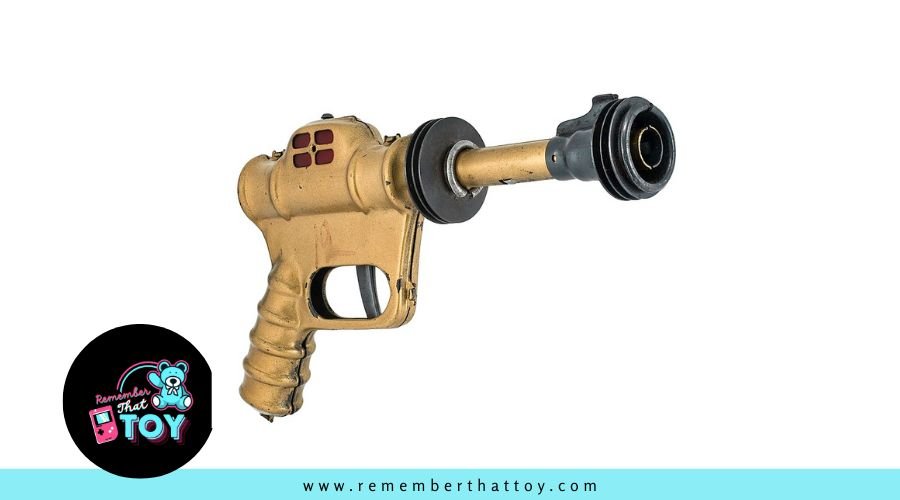
Buck Rogers Ray Guns
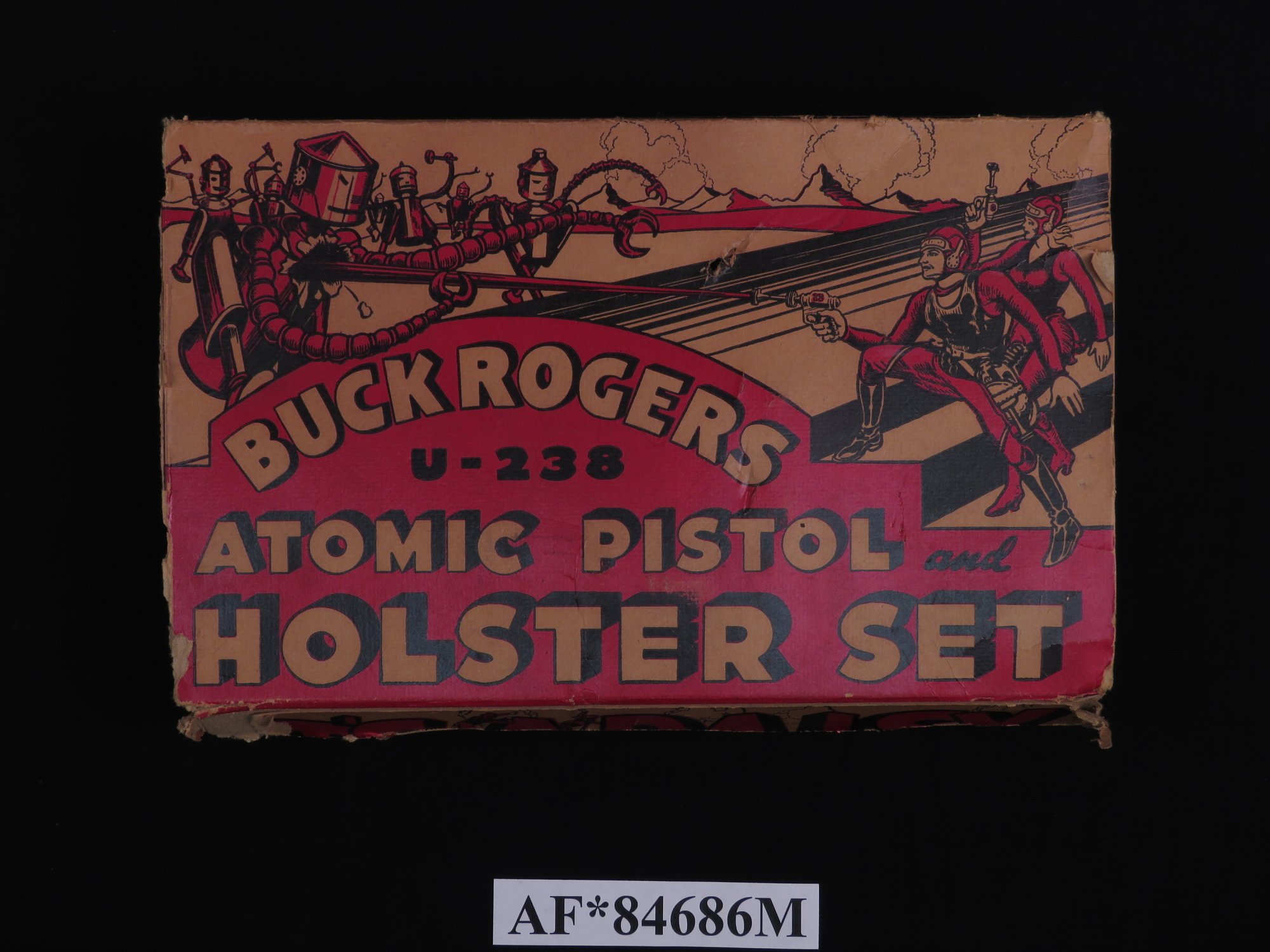
Anthony "Buck" Rogers first appeared in the pulp magazine Amazing Stories in August 1928. Created by Philip Nowlan, Rogers is an air force officer who awakens in the 25th century, discovering an America in ruins and dominated by invaders from China. Alongside allies like Wilma Deering and Dr. Huer, Buck Rogers embarks on adventures filled with futuristic technology such as rocket pistols and anti-gravity belts.
Photo: Buck Rogers in the 25th Century U-238 Atomic Pistol - Box for gun
Expansion to Comic Strips and More
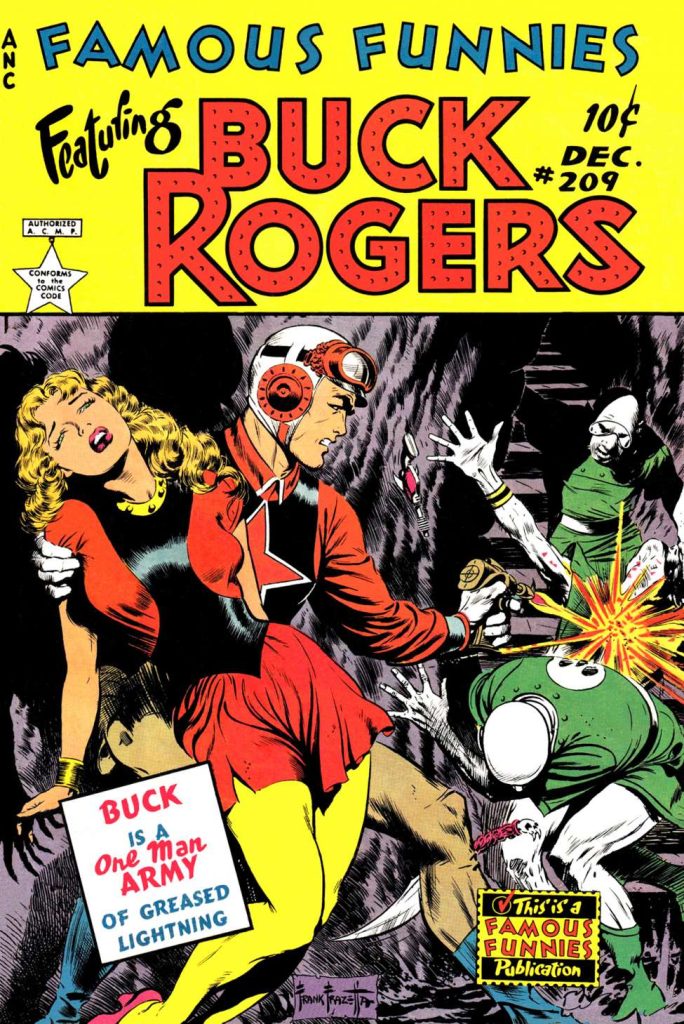
In 1929, Nowlan and illustrator Dick Calkins launched a daily comic strip with Buck Rogers, transforming the hero's adventures into a serialized narrative enjoyed by a wider audience. To recall the heroic cowboys of America's Wild West, Anthony Rogers’ name was changed to "Buck." The comic strip was immediately successful, running for more than four decades. Buck Rogers became a household name, crossing over into radio shows (1932-1947), movies, and television series in the 1950s and 1980s.
Buck Rogers Merchandise
With the rise in popularity of Buck Rogers, merchandise became a key part of the brand. Items ranged from storybooks to model rocketships, and Buck Rogers merchandise became a favorite among American children. Companies quickly capitalized on this trend by offering premiums like Buck Rogers playsets.
Cardboard Ray Guns
One notable premium was the first cardboard ray gun in 1933, offered by Cocomalt cereal. This early toy was part of a playset that included a helmet and other accessories, which allowed children to immerse themselves in Buck Rogers' world. Warren Paper Products Inc. produced a similar paper gun called the "Flash Blast Ray" in 1937, which came with a Rocket Ship Control Base complete with Dr. Huer's laboratory. Subsequent paper guns followed, including a model from Onward School Supplies in 1940 and a Space Ranger Kit from Sylvania Electric Products in 1952.
The Daisy Manufacturing Company's Metal Ray Guns
The true icons of Buck Rogers ray guns, however, were the metal versions produced by Daisy Manufacturing Co. In 1934, Daisy Manufacturing introduced its first Buck Rogers ray gun, the XZ-31 Rocket Pistol. Before launching, the company worked closely with Nowlan and Calkins to ensure the toys closely resembled the guns and gadgets seen in the comic strip. Their efforts paid off, with the XZ-31 Rocket Pistol becoming a massive hit.
The XZ-31 Rocket Pistol and Its Marketing Success
In February 1934, Daisy's XZ-31 Rocket Pistol made its grand debut at the American Toy Fair. The gun's popularity was boosted by a unique marketing strategy, which included utilizing props from Detroit's J.L. Hudson department store and an exclusive promotion deal with Macy's. The marketing campaign was so successful that consumers lined up outside Macy's to purchase the Rocket Pistol, leading to a nationwide demand that Daisy struggled to meet. The limited supply even sparked a price war between Macy's and Gimbel's, further boosting the toy's allure.
Subsequent Buck Rogers Ray Guns
Following the XZ-31 Rocket Pistol, Daisy Manufacturing created more Buck Rogers ray guns. These included the XZ-35 "Wilma Deering" Rocket Pistol, a smaller version of the Rocket Pistol named after Buck Rogers' female companion. The XZ-38 Disintegrator Pistol, introduced in 1935, featured an Art Deco design with fluted barrels and flamboyant fins, adding to the futuristic appeal.
Xz-44 and U-235 Atomic Pistol
Daisy continued to innovate with the XZ-44 Liquid Helium Water Pistol and the U-235 Atomic Pistol. These toys not only captured children’s imaginations but also reflected the era's fascination with atomic energy and technological progress.
Cultural and Historical Significance
The Buck Rogers ray guns became more than just toys. They were symbols of a burgeoning interest in space exploration and futuristic technology. They also had a profound influence on science fiction, inspiring other popular characters and stories in the same genre.
Collections and Legacy
Today, Buck Rogers ray guns are cherished by collectors and are displayed in major museums like the Smithsonian's National Air and Space Museum. These artifacts represent a significant part of American pop culture, showcasing an era when space adventures ignited the imaginations of young and old alike.
Media Adaptations and Continuing Influence
From comic strips to radio shows, and both big and small screens, Buck Rogers has left an indelible mark on multiple forms of media. Different versions of Buck Rogers have appeared in various books, film, and television series, keeping the character relevant through decades. The character's enduring appeal is a testament to his impact on science fiction and popular culture.
Conclusion
Buck Rogers and his ray guns are seminal elements in the lexicon of American entertainment. From pulp magazine origins to vast merchandising success, they have captured imaginations and influenced countless other creations in science fiction. These ray guns, in particular, stand out as iconic symbols of a visionary future once only imagined.