Bubble Solution: The 1940s Invention That Made Bubble Blowing Magical
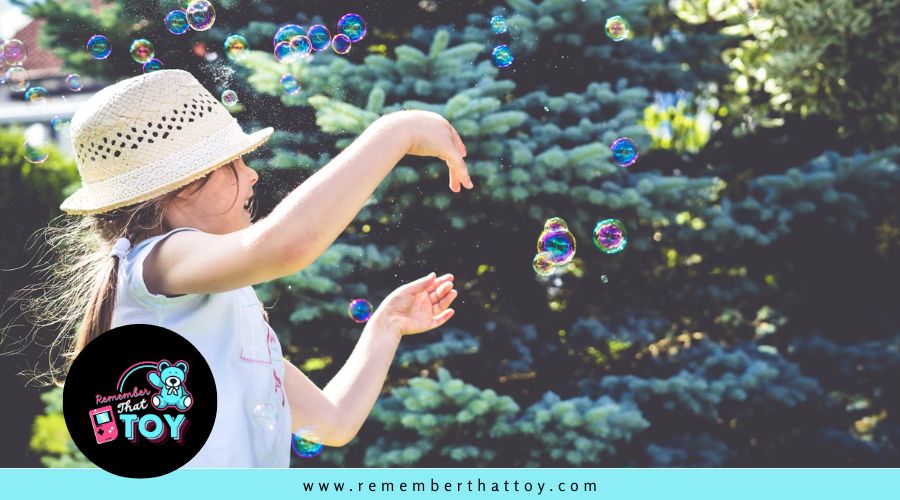
The history of bubble solutions reveals a fascinating evolution from simple mixtures of water and soap in the 1600s to the commercial products we enjoy today. Early enthusiasts experimented with different combinations, laying the groundwork for what would become a beloved pastime. In 1880, C.V. Boys documented the initial technical formulas for bubble solutions in his book 'Soap Bubbles.' He highlighted ingredients like Castile soap and glycerin, which improved bubble blowing by enhancing stability and longevity.
A significant turning point came in 1940 when Chemtoy introduced the first commercial bubble solution in Chicago. This innovation made bubble blowing accessible to millions, sparking a surge in popularity. By the 1940s, people were captivated by the joy of creating bubbles, leading to annual sales of around 200 million bottles today.
The simple pleasure of bubble blowing transformed into a cultural phenomenon, with families gathering to enjoy this delightful activity. The rich history of bubble solutions showcases human creativity and the desire for fun, reminding us that every bubble we blow carries a piece of that legacy.

Innovations in Bubble Formulas
Innovations in bubble formulas have transformed the way we create and enjoy bubbles, enhancing both their durability and vibrancy.
Here are some key advancements:
- Arabic Gum: Introduced in 1928, this ingredient improves the elasticity of bubble solutions, making bubbles more durable.
- Gelatin Paper: A cellulose derivative that boosts bubble integrity and performance.
- Soapless Formulas: Utilizing acetone and film strips, these formulas offer unique bubble production methods beyond traditional soap-based solutions.
- Larger Bubbles: Henry Redka's 1959 formula enabled the creation of bubbles up to 10 feet in diameter, greatly expanding bubble-blowing possibilities.
- Polymers: A.V. Grosse's 1969 research highlighted the use of polymers, resulting in stronger and more elastic bubbles.
These innovations ensure a magical bubble-blowing experience, captivating both children and those young at heart.
Benefits of Bubble Blowing
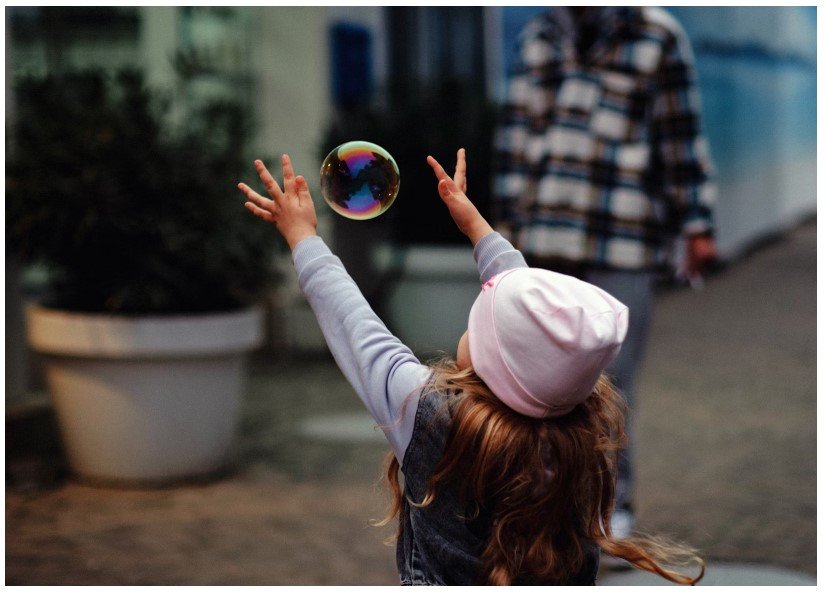
Bubble blowing provides numerous developmental benefits for children, enhancing their physical, motor, and cognitive skills through playful engagement. As children manipulate bubble wands, they improve their fine motor skills, promoting dexterity and hand-eye coordination essential for their overall development.
The activity also benefits gross motor skills. Chasing and popping bubbles involve physical movement that encourages coordination and fitness. Blowing bubbles fosters oral motor skills as children practice breath control and mouth movements, crucial for speech development.
Additionally, bubble play enhances listening skills and body awareness. Children learn to follow instructions while actively engaging their bodies. Research indicates that bubble blowing positively impacts cognitive development, encouraging problem-solving and creative thinking, thereby supporting intellectual growth.
Techniques for Bubble Blowing
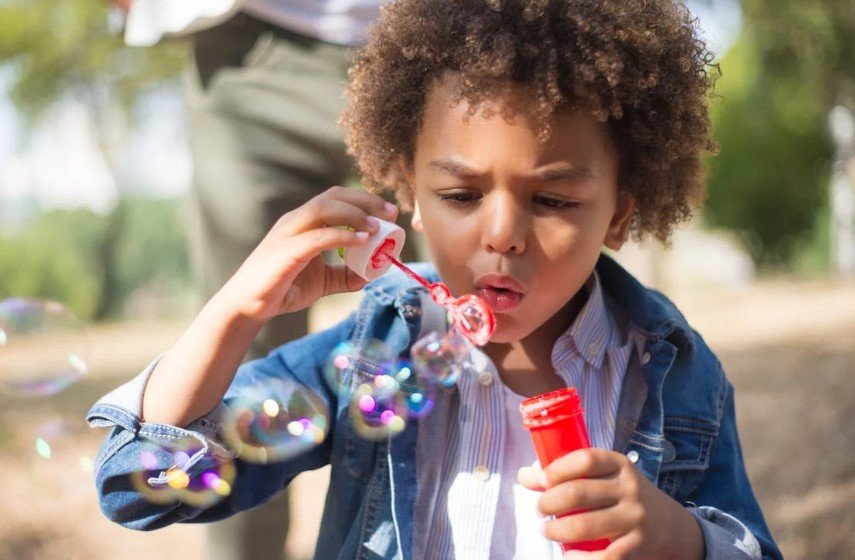
Crafting homemade bubble wands using everyday materials like straws or pipe cleaners can lead to a fun and creative bubble-blowing experience. You can design different shapes and sizes to see how they impact your bubble production. Here are some materials you can use for your bubble wands:
- Straws
- Pipe cleaners
- Bent wire
- Wooden skewers
- Old coat hangers
Once you've made your bubble wand, dip it into a bubble solution made of dish soap, water, and glycerin. Ensure the mixture coats the wand evenly for optimal bubble blowing. Experiment with different sizes; larger wands create giant bubbles, while smaller ones produce many smaller bubbles.
To enhance your bubble experience, try using a circular hand motion as you pull the wand from the solution. This technique helps form a larger bubble at the tip. You can also incorporate movement by jumping or waving the wand, creating dynamic bubbles that float and drift through the air. Enjoy the magic of blowing bubbles with your homemade creations!
Experimenting With Solutions
Experimenting with various bubble solutions can significantly enhance your bubble-blowing experience, helping you find the ideal mixture for both size and longevity. The primary ingredients to experiment with are soapy water, glycerin, and optional additives like corn syrup. Adjusting their ratios can yield unique results, so try different combinations to see what works best for you.
Here's a simple guide to get you started:
| Ratio | Ingredients | Effect |
|---|---|---|
| Standard | 85.9% water, 10% glycerin, 4% dish soap | Good balance of size and longevity |
| High Glycerin | 70% water, 20% glycerin, 10% dish soap | Larger, longer-lasting bubbles |
| Additive Boost | 80% water, 10% glycerin, 5% dish soap, 5% corn syrup | Enhanced elasticity and strength |
Additionally, consider environmental factors; higher humidity can improve bubble performance. Don't hesitate to create homemade bubble wands from materials like straws or pipe cleaners to experiment with different shapes and sizes. The right bubble solution, combined with your creativity, can lead to magical bubble-blowing adventures!
Movement and Coordination Activities
Incorporating movement activities into bubble blowing not only makes it more enjoyable but also enhances coordination and gross motor skills. Engaging in various physical activities while playing with bubbles enriches your experience and supports healthy development.
Here are some techniques you can try:
- Homemade Wands: Use flexible materials like pipe cleaners or straws to create your own bubble wands, encouraging creativity and fine motor skills.
- Chase and Jump: Encourage children to run and jump to catch the bubbles, thereby improving their gross motor skills through active play.
- Size Challenges: Practice blowing bubbles of different sizes from various distances, promoting control and precision.
- Pop with Body Parts: Use hands, feet, or heads to pop bubbles, fostering body awareness and developing motor skills.
- Team Games: Organize collaborative bubble-popping games where children work together to pop a set number of bubbles, promoting teamwork and social interaction.
Engaging in these activities not only makes bubble blowing exciting but also supports the development of essential motor skills for everyday life.
Cultural Impact of Bubbles
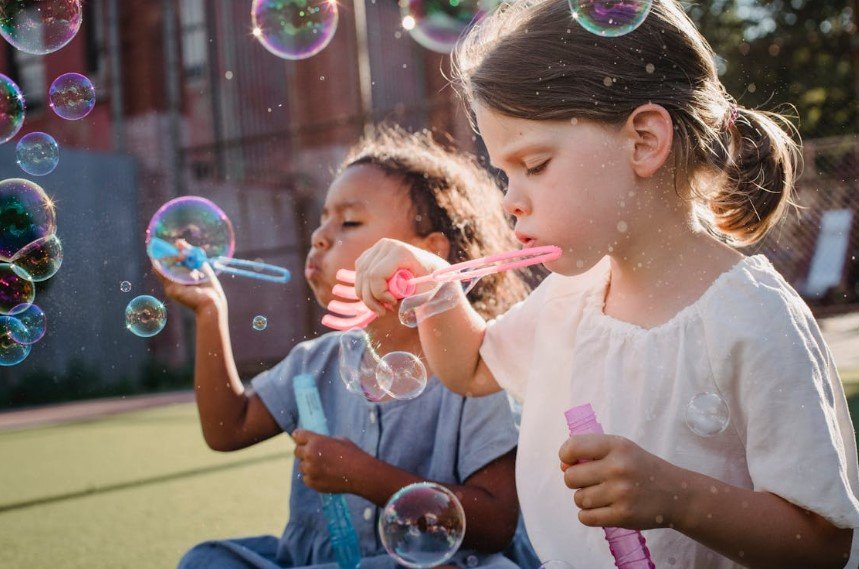
Bubbles have had a significant cultural impact, evolving from a simple childhood activity to a universal symbol of joy and celebration. Bubble performers captivate audiences with their enchanting displays, bringing smiles to people of all ages. The image of children blowing bubbles evokes innocence and carefree fun, reminding us of simpler times. Since the 1940s, when Chemtoy introduced commercial bubble solutions, millions have embraced this delightful pastime, making it a staple at family gatherings, birthday parties, and outdoor events.
Additionally, bubbles have become part of cultural celebrations, often replacing traditional rice throwing at weddings. This practice symbolizes good luck and joy for newlyweds, reinforcing the idea that bubbles bring happiness wherever they float. In conclusion, bubbles hold a special place in our hearts and culture, infusing life's moments with a touch of magic.
Educational Value of Bubbles
The joy that bubbles bring isn't just for play; they offer valuable educational opportunities that enhance learning across various subjects. By incorporating bubbles into educational activities, you can create engaging experiences that help children develop essential skills.
Here are some educational benefits of bubbles:
- Physics Principles: Bubbles demonstrate flexibility by stretching and bending, introducing fundamental concepts in physics.
- Color Theory: Watching bubbles reflect light helps illustrate the science of color and light.
- Motor Skills: Engaging with bubbles improves both fine and gross motor coordination, crucial for physical development.
- Oral Motor Skills: Blowing bubbles with wands encourages children to practice their blowing techniques, aiding speech and language development.
- Cognitive Development: Following bubble-related instructions promotes critical thinking and interactive play, enriching cognitive abilities.
From early childhood to higher education, bubbles can be versatile educational tools. They create memorable lessons that blend fun and learning, helping students grasp complex concepts. So, why not let bubbles become part of your teaching toolkit?
Mathematical Properties of Bubbles
Soap bubbles illustrate fascinating mathematical properties, including minimal surfaces and ideal shapes in nature. When you blow a soap bubble, it minimizes surface area for a given volume, showcasing efficiency. According to H. A. Schwarz's theorem, a spherical soap bubble represents the least-area enclosure for a specific volume, making it a prime shape in nature.
The double bubble conjecture is evident when two soap bubbles merge. They form a shape that minimizes the total surface area while enclosing two distinct volumes, demonstrating how these mathematical properties influence their formation. Plateau's laws state that soap bubbles can only form stable configurations with three walls meeting at a point, where the angles between them are precisely 120°.
The longevity and stability of soap bubbles also depend significantly on their solution composition. An optimal mixture comprises around 85.9% water, 10% glycerol, 4% dishwashing liquid, and 0.1% guar gum. These precise ratios enhance the bubbles' durability, illustrating the intricate balance of mathematical properties that govern their behavior.
Artistic Expressions With Bubbles
Artistic expressions with bubbles captivate audiences by blending science and creativity into mesmerizing performances. The magic often lies in the delicate balance of techniques and materials. The ability to create giant bubbles and intricate shapes depends on the artist's skill and the quality of the bubble solution. Notable artists like Tom Noddy, Fan Yang, and The Amazing Bubble Man have elevated bubble artistry, enchanting spectators of all generations.
Key elements that enhance bubble performances include:
- Visual effects: Smoke and lasers add drama and spectacle.
- Iridescence: Optical interference in soap films generates stunning colors.
- Innovative tools: Bubble wands and rings of various sizes and designs.
- Environmental enhancements: Helium can lift bubbles, creating floating spectacles.
- Competitions: Annual festivals showcase unique bubble formations and artistry.
Each performance fuses art and science, demonstrating the endless possibilities that arise from something as simple as a bubble. Watching these displays evokes a sense of wonder and creativity.
Modern Bubble Solutions
Modern bubble solutions have significantly evolved since their inception, thanks to advancements in ingredients such as glycerin and polymers. These innovations not only enhance bubble durability but also enable the creation of larger bubbles. With the availability of online resources, experimenting with various recipes has become more convenient and accessible than ever before.
Enhanced Ingredients and Formulations
Key components that enhance modern bubble solutions include:
- Glycerin: Increases viscosity, enhancing bubble durability and longevity.
- Corn Syrup: Retains moisture, preventing bubbles from popping prematurely.
- Dish Soap: Essential for forming the bubble film; modern versions are significantly improved over older formulas.
- Polymers: Add elasticity, enabling the creation of larger bubbles.
- Water Quality: Using distilled or filtered water can significantly improve bubble performance.
Conclusion
Bubble solutions have transformed a simple pastime into a cherished tradition. Originating in the 1940s and evolving into today's advanced formulas, bubbles continue to bring joy and creativity to people of all ages. Whether you're blowing bubbles at a family gathering or exploring their artistic potential, these delicate spheres symbolize the magic of childhood and shared moments. So grab a bottle, gather your loved ones, and let the bubbles float your worries away.