10 Toys That Became Million-Dollar Franchises
Toys have evolved tremendously over the years. A century ago, children's playthings were simple and handmade, often crafted from wood. These early toys were purely for fun, with no thought of creating extensive entertainment franchises around them. Fast forward to today, and the world of toys has changed dramatically.
Many toys now spark major franchises, leading to TV shows, movies, and various merchandise lines. Companies like Mattel and Hasbro have produced iconic toys that became cultural phenomena. From Mattel's Barbie and Hot Wheels to Hasbro's G.I. Joe and Transformers, these toys have generated billions in revenue and continue to capture the imaginations of children and adults alike.
1. My Little Pony
My Little Pony (MLP) was introduced by Hasbro in 1983, featuring colorful ponies with brushable manes and tails. The toy line quickly captured the hearts of young girls, becoming a staple in the toy industry.
Manufacturer: Mattel
Popularity:
- 1983: MLP sales reached $25 million.
- 1984: After the release of its first television special, sales soared to $85 million.
- 1985: Annual sales exceeded $100 million.
- 1986: An animated series boosted sales, with more than 150 million Ponies sold by the end of the '80s.
The 2010 series "My Little Pony: Friendship is Magic" rejuvenated interest, appealing to both nostalgic adults and new fans. By 2013, over 200 licensed MLP products were available, making it one of Hasbro's best-selling lines. A theatrical release inspired by the series was scheduled for 2017.
2. Cabbage Patch Kids
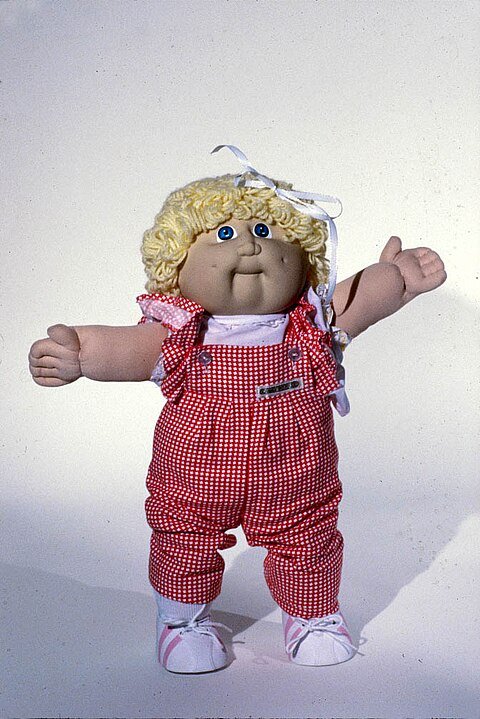
Cabbage Patch Kids, one of the most beloved toy lines of all time, originated in 1978 when Xavier Roberts, a 21-year-old art student, created soft sculpture dolls called "Little People." These dolls were handmade and sold at craft fairs, and later at Babyland General Hospital in Cleveland, Georgia.
Creator: Xavier Roberts
Popularity:
- 1983: Coleco started mass production, selling over 3 million dolls.
- 1985: Annual sales exceeded $600 million.
- 2014: Still popular, with $50 million in annual sales.
These dolls caused store fights during the holiday season and remain beloved collectibles. Babyland General Hospital in Georgia continues to be a popular attraction for witnessing Cabbage Patch Kids births.
3. G.I. Joe
G.I. Joe, the pioneering action figure line, was introduced by Hasbro in 1964. Marketed as "America's Movable Fighting Man," G.I. Joe was the first toy to use the term "action figure," distinguishing it from traditional dolls.
Manufacturer: Hasbro
Evolution:
- Late '70s: Discontinued due to waning interest.
- Early '80s: Reintroduced with a new design and a supporting cartoon series, reigniting popularity.
The brand has remained in continuous production for over 30 years. The 2009 film grossed over $300 million, while its 2013 sequel earned $375 million.
4. Care Bears
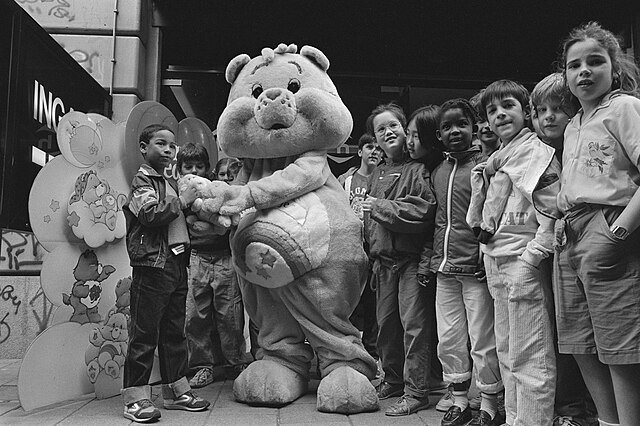
The Care Bears began as a series of greeting card designs developed by American Greetings in 1981. These colorful and cuddly characters were created to convey love and kindness, featuring a variety of bears with unique "belly badges" representing their personalities.
Creator: American Greetings
Popularity:
- First 5 years: Generated over $2 billion in retail sales.
- 1987: More than 40 million bears sold.
The line remains strong, with consistent sales and cultural impact, driven by animated films and series.
5. Hot Wheels
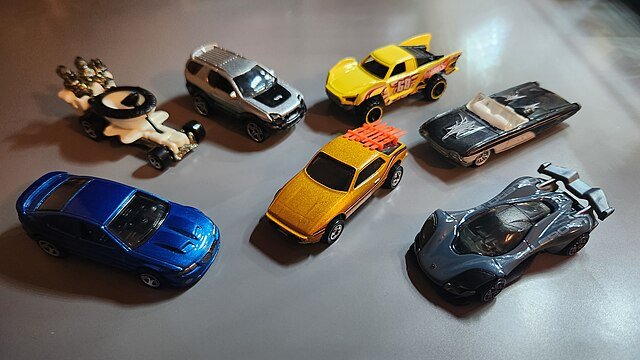
Hot Wheels, the iconic line of miniature die-cast cars, was introduced by Mattel in 1968. The brainchild of Elliot Handler, co-founder of Mattel, Hot Wheels revolutionized the toy car market with its flashy designs, innovative features, and extensive variety.
Manufacturer: Mattel
Popularity:
- 1969: An animated series helped promote the brand.
- Next 40 years: Over 4 billion cars sold.
Collections can be extremely valuable, and a live-action movie was planned in 2013 to capitalize on the brand's rich history.
6. Teenage Mutant Ninja Turtles (TMNT)
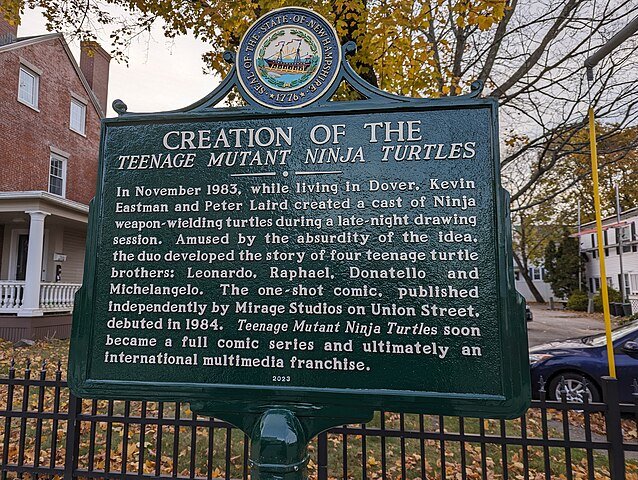
Teenage Mutant Ninja Turtles (TMNT) originated from a comic book series created by Kevin Eastman and Peter Laird in 1983. The comic, initially intended as a parody of popular superhero genres, quickly gained a cult following. The TMNT franchise, featuring four anthropomorphic turtles trained in ninjutsu by their rat sensei, Splinter, would go on to become one of the most successful and enduring brands in pop culture.
Creators: Kevin Eastman and Peter Laird
Popularity:
- First 4 years: Over a billion dollars in toy sales.
- 1990: Live-action film grossed $200 million.
The brand saw a resurgence with a 2014 film, generating nearly $100 million in its opening weekend.
7. Lego
Lego, the iconic building block toy, was founded by Ole Kirk Christiansen, a Danish carpenter, in 1932. Initially, Christiansen produced wooden toys, but the company began producing plastic interlocking bricks in 1949. The name "Lego" is derived from the Danish words "leg godt," meaning "play well." Little did Christiansen know that his simple creation would grow into one of the largest and most influential toy brands in the world.
Founder: Ole Kirk Christiansen
Popularity:
- 2013: $4.6 billion in sales.
- 2014: "The Lego Movie" grossed $69 million on its opening weekend.
Lego theme parks attract millions, and the brand continues to inspire blockbuster movies and video games.
8. Monster High
Monster High, a unique line of fashion dolls, was introduced by Mattel in 2010. The concept was groundbreaking: instead of following the traditional route of creating a TV show or movie first, Mattel launched the dolls and then developed media to support the brand. This innovative approach allowed the brand to craft a rich, multifaceted world that resonated with a broad audience.
Manufacturer: Mattel
Popularity:
- 2010: Became the most in-demand toy for Christmas.
- 2013: Annual sales exceeded $500 million.
Television specials and webisodes expanded the brand into a major franchise in the toy industry.
9. Transformers
Transformers made their debut in 1984 when Hasbro acquired the rights to a line of Japanese robot toys. These toys, capable of transforming from vehicles into robots and vice versa, captured the imagination of children worldwide. To support the launch, Hasbro introduced an accompanying comic book series and an animated TV show, both of which became instant hits and helped solidify Transformers as a cultural phenomenon.
Manufacturer: Hasbro
Popularity:
- 2007: Film reboot led to $482 million in toy sales.
- 2014: "Transformers: Age of Extinction" grossed over $1 billion.
he franchise continues to thrive with new films and merchandise.
10. Barbie
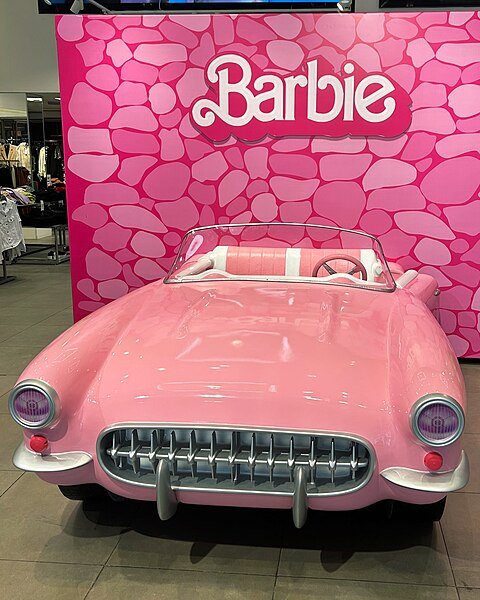
Barbie, the iconic fashion doll, was introduced to the world on March 9, 1959, by Ruth Handler, co-founder of Mattel. Inspired by a German doll named Bild Lilli, Handler envisioned a doll that would empower young girls to imagine their future selves in various roles and careers.
Manufacturer: Mattel
Popularity:
- 1960s: Licensed to over 100 companies.
- 2014: Annual sales of $3 billion.
Barbie remains the top-selling doll worldwide, with diverse product lines and the highly successful live-action movie.
Conclusion
These iconic toys have not only provided endless hours of entertainment but have also left a lasting cultural impact. Their evolution and continued popularity demonstrate the dynamic nature of the toy industry and its ability to adapt to changing times.